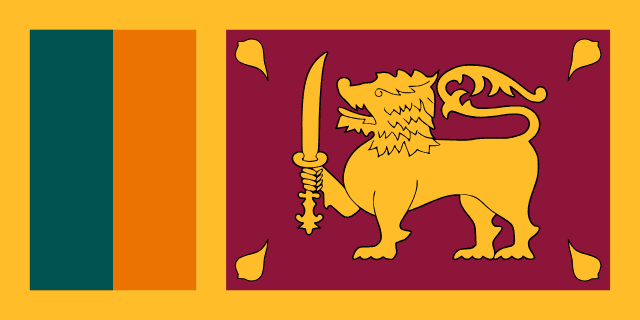
flag — Sri Lanka
Nation by Nation
Sri Lanka
History
History
Sri Lanka, known as Ceylon until 1972, has a recorded history stretching back more than 2,500 years. The Sinhalese, who arrived from northern India around the 5th century B.C., founded the kingdom of Anuradhapura, whose vast irrigation works and Buddhist monuments still stand. Buddhism reached the island in the 3rd century B.C. through missionaries of the Indian emperor Ashoka and became the heart of Sinhalese civilization. Tamil settlers and invaders from southern India established their own kingdoms in the north, most notably the Jaffna kingdom.
The island's position astride Indian Ocean trade routes drew Arab, Chinese, and eventually European traders. The Portuguese arrived in 1505 and seized the coastal lowlands; the Dutch displaced them in the 17th century; and the British took over in 1796, uniting the whole island as the crown colony of Ceylon by 1815 after conquering the central Kingdom of Kandy. Under British rule, plantation agriculture — first coffee, then the famous Ceylon tea, along with rubber and coconut — transformed the economy and brought Tamil laborers from India.
Ceylon gained independence peacefully in 1948 and became the Republic of Sri Lanka in 1972. Post-independence politics were dominated by tension between the Sinhalese Buddhist majority and the Tamil Hindu minority. In 1983 this erupted into a brutal civil war, when the Liberation Tigers of Tamil Eelam (LTTE) launched an insurgency for an independent Tamil state. The conflict lasted 26 years and killed an estimated 100,000 people before government forces crushed the Tigers in 2009. In 2004 the island was also devastated by the Indian Ocean tsunami.
In 2022 Sri Lanka suffered its worst economic crisis since independence. Years of heavy foreign borrowing, deep tax cuts, the collapse of tourism, and a sudden ban on chemical fertilizers culminated in a sovereign debt default and crippling shortages of food, fuel, and medicine. Mass protests forced President Gotabaya Rajapaksa from office. With support from the International Monetary Fund, the country has since pursued painful reforms aimed at stabilization and recovery.