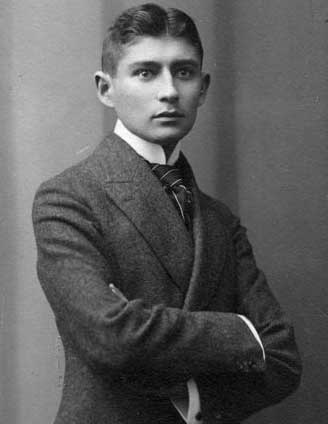
Franz Kafka was a German-language writer from Prague whose haunting, nightmarish fiction — though little known in his lifetime — became one of the most influential bodies of work in modern literature, giving rise to the very word "Kafkaesque." Born into a middle-class Jewish family in what was then Austria-Hungary, he had a strained relationship with his domineering father that shadowed much of his writing.
Kafka trained as a lawyer and spent his working life as an insurance official, writing at night with painful intensity. His tales conjure a world of inexplicable guilt, faceless bureaucracy, and individuals trapped in absurd, menacing situations they cannot understand or escape. In the famous story The Metamorphosis, a man wakes to find he has been transformed into a giant insect; in the unfinished novels The Trial and The Castle, his protagonists struggle helplessly against incomprehensible authorities.
Tormented by self-doubt and chronic illness, Kafka published only a handful of works during his life and considered much of his writing a failure.
Dying of tuberculosis in 1924 at the age of forty, he instructed his friend Max Brod to burn his unpublished manuscripts. Brod refused, and instead published The Trial, The Castle, and Amerika, securing Kafka's posthumous reputation as a prophet of the anxieties of the modern age. His vision of bewildered individuals crushed by impersonal forces seemed to anticipate the totalitarian horrors that followed his death.