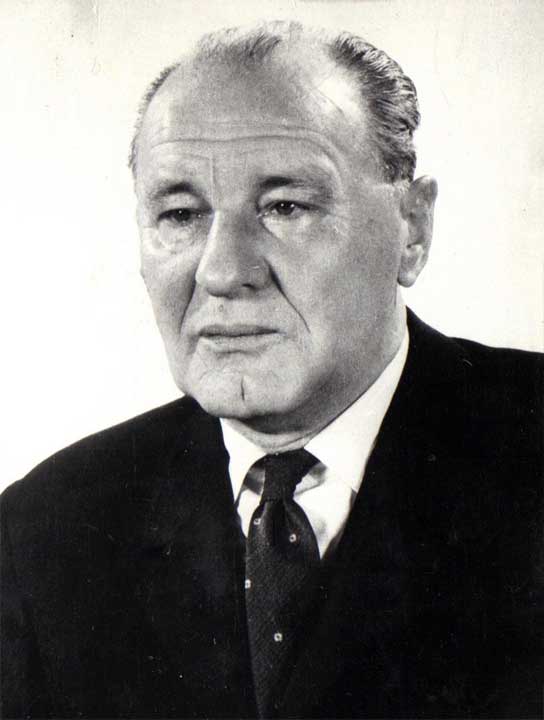
János Kádár was the Communist leader who ruled Hungary for more than three decades, coming to power amid the bloody Soviet suppression of the 1956 uprising and later softening the regime into the most tolerable of the Eastern Bloc dictatorships. Born in the Adriatic port of Fiume, he grew up in poverty, became a Communist in his youth, and worked in the party underground.
His path to power was marked by a notorious act of betrayal. During the Hungarian Revolution of 1956, Kádár at first joined the reformist government of Imre Nagy, but then defected to the Soviet side, and after Soviet tanks crushed the rising he was installed as the country's leader. His regime executed Nagy and thousands of others in a brutal wave of reprisals.
Yet over the following years Kádár surprised his subjects and the world by gradually relaxing the system. Under the slogan "those who are not against us are with us," he loosened political controls, freed many prisoners, and introduced cautious economic reforms — the so-called "goulash communism" that allowed Hungarians a higher standard of living and more personal freedom than their neighbors.
For a generation Hungary was the most relaxed and prosperous of the Soviet satellites, and Kádár, once hated as a traitor, came to be grudgingly accepted by many. As economic troubles mounted in the 1980s, he was eased aside in 1988. He died in 1989, in the very weeks that communism was collapsing across the region.