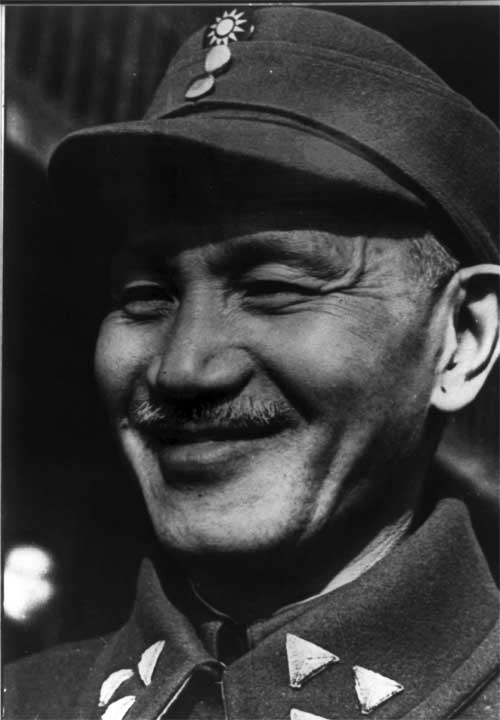
Chiang Kai-shek was the Chinese Nationalist leader who governed much of China for two decades, led it through the long war against Japan, and, after his defeat by the Communists, ruled Taiwan until his death. Born near Shanghai, he trained as a soldier and became a military aide to the revolutionary leader Sun Yat-sen, founder of the Nationalist Party, the Kuomintang.
After Sun's death, Chiang rose to lead the party and its army. In the late 1920s he launched the Northern Expedition that brought much of China under Nationalist control, then turned violently against his former Communist allies, beginning a long and bitter struggle for the soul of China. As head of the Nationalist government he sought to modernize the country while fighting both Communist insurgents and regional warlords.
The Japanese invasion of the 1930s forced an uneasy united front, and Chiang led China's grueling resistance through the Second World War, becoming one of the Allied leaders. But his regime was weakened by corruption, inflation, and military failure.
When the civil war resumed after 1945, Mao Zedong's Communists swept to victory. In 1949 Chiang fled with his government and army to the island of Taiwan, where he established an authoritarian Nationalist state that continued to claim to be the legitimate government of all China. Backed by the United States, he ruled Taiwan, presiding over its economic development, until his death in 1975.