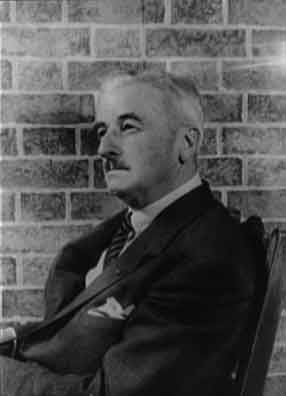
William Faulkner was the American novelist whose dense, experimental fiction of the Deep South won him the Nobel Prize and a place among the giants of twentieth-century literature. Born in Mississippi and raised in the small town of Oxford — the model for his imaginary Yoknapatawpha County — he was a restless, indifferent student who never finished high school and largely educated himself.
After a brief stint in the Royal Air Force and early efforts as a poet, Faulkner found his subject in the history, families, and racial torment of his native South. He developed a demanding modernist style — long, coiling sentences, multiple narrators, fractured chronology, and stream of consciousness — to render the weight of the past on the present. His major novels include The Sound and the Fury (1929), As I Lay Dying (1930), Light in August (1932), and Absalom, Absalom! (1936).
For years his difficult books sold poorly and were better appreciated in Europe than at home, and he supported himself in part by writing Hollywood screenplays. His fortunes turned with a 1946 anthology that revived critical interest.
In 1949 he was awarded the Nobel Prize in Literature, delivering a celebrated acceptance speech declaring his faith that mankind would "not merely endure: he will prevail." He won two Pulitzer Prizes and ended his life as a revered man of letters, serving as a cultural ambassador for the United States. He died in Mississippi in 1962.