
Custom Search
The Trump administration is considering slashing the cap for refugee admissions again — but this time, it could be to zero.
Before his initiation into the White House, Trump’s campaign was heavily centered around restricting immigration. Since then, the US president has taken many major steps against immigrants — which include banning citizens from eight majority-Muslim countries from entering the US and cancelling the Deferred Action for Childhood Arrivals (DACA) program. The latter protects undocumented immigrants who arrived at the United States as children, and its repeal endangers thousands, if not millions of immigrants across the country.
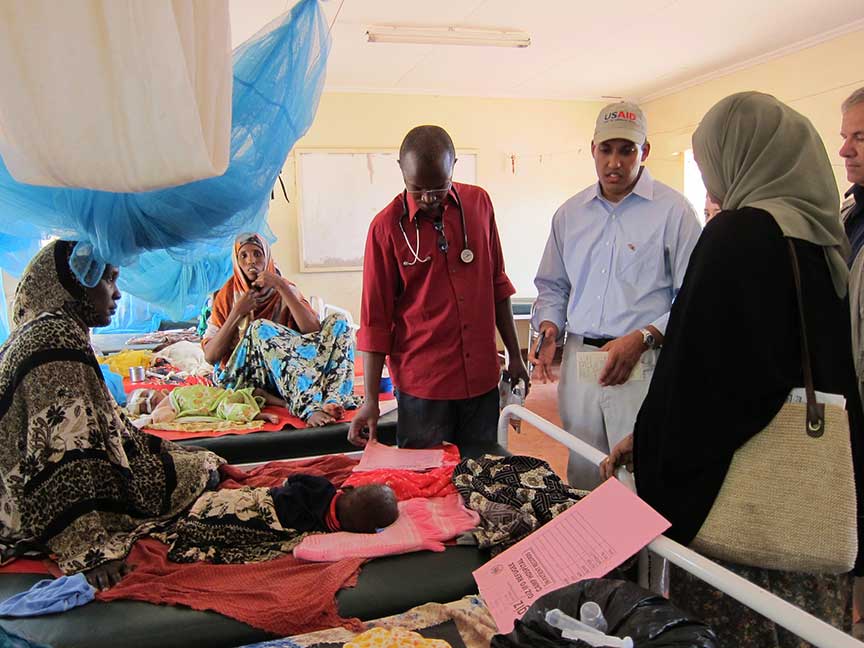
Currently, Trump is continuing his “America First” program, to the dismay of human rights advocates. Reports reveal that the White House is considering further reducing the cap on refugee admissions, which is currently at 30,000 — down from 45,000 in 2018, and the lowest ceiling since 1980. For perspective, the admission cap during Barack Obama’s last year of office was at 110,000 refugees
Since its introduction in 1980, the US refugee resettlement program has made the country the global leader of resettlement. Not only does it have humanitarian aims, but it has also served the country’s strategic aims in countries like the Middle East and southeast Asia.
Furthermore, despite last year’s limit being at 45,000, government data shows that only 22,491 refugees were admitted. This was caused by the more stringent security protocols for citizens of 11 countries. These countries — namely, Egypt, Iran, Iraq, Libya, Mali, North Korea, Somalia, South Sudan, Sudan, Syria, and Yemen — were flagged by the administration as presenting the greatest potential threat. Even the US Department of State has admitted that the fewer refugee admissions were caused by the rigorous vetting process.
Although no decisions have been made just yet, the cut is expected to be the last nail in the coffin for those looking to seek a better life in the country. It would also divert caseworkers to handle asylum claims from Central American families at the southern US border. Recently, the administration has been focusing its efforts on addressing hundreds and thousands of majority-Central American families who have crossed the US border during the past year to seek refuge.
Should Trump follow through with more drastic cuts, the change will affect thousands of refugees who are currently going through the long process of coming to the US, as well as the resettlement programs already in place. Currently, Think Progress reports that over 29,000 refugees have completed interviews with U.S. Citizenship and Immigration Services, and more than 100,000 are still on the waiting list. These refugees who are patiently waiting through the typically 18 to 24-month long process are at risk of losing protection that they need should the program shut down.
Democratic Senator and presidential contender Elizabeth Warren has contested against the potential move via Twitter, saying, “This is immoral. Our laws and values compel us to help those fleeing violence and oppression. As president, I'll welcome at least 175,000 refugees per year by the end of my first term.”
Advocates and rights groups have also voiced concerns over Trump’s plans since his induction into the White House. In a statement last 2017, Save the Children pointed out the life-changing opportunities that the US presents for refugees who come from war-torn countries such as Syria, further emphasizing the role that US plays as a leading pillar for stability and liberty in the world. Cancelling these programs, the organization argues, is to cease being "a pillar for stability and liberty in the world."
Moreover, even retired US military officials are expressing their grave concerns over the situation, sending an open letter appealing to the White House to reconsider slashing refugee admissions. “Providing safe haven to the most vulnerable refugees — those that cannot be safe in their countries of first refuge — demonstrates America's humanitarian leadership and supports region stability by preventing premature returns back to war-torn or unstable countries," the generals wrote.