Telegraph used in Railroads
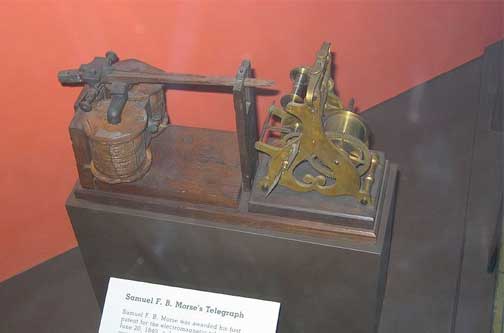
The introduction of the electric telegraph in the 1840s transformed how railroads operated. For the first time, messages could travel faster than any train, allowing companies to report the position and status of trains almost instantly along a line. Dispatchers could learn where trains were, issue orders, and coordinate movements from a central office, a capability that earlier timetable systems alone could not provide. Telegraph wires were commonly strung alongside the tracks, making rights-of-way natural corridors for the spreading network.
This union of railroad and telegraph proved mutually reinforcing. Centralized control made single-track operation far safer and more efficient, reducing collisions and improving scheduling as traffic grew. At the same time, by hosting telegraph lines along their routes, railroads became hubs of both physical and electronic communication, linking distant towns and businesses. The combination accelerated commerce and helped lay the groundwork for the integrated national rail and communication systems of the later nineteenth century.