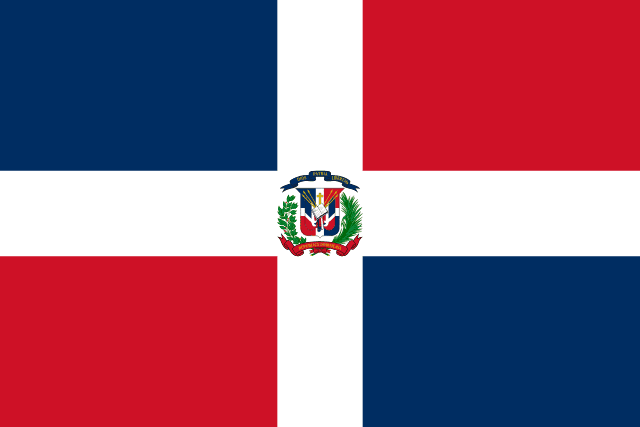
flag — Dominican Republic
Nation by Nation
Dominican Republic
Government
Government
Country name conventional long form: Dominican Republic
conventional short form: The Dominican
local long form: Republica Dominicana
local short form: La Dominicana
etymology: the country name derives from the capital city of Santo Domingo (Saint Dominic)
Government type presidential republic
Capital name: Santo Domingo
geographic coordinates: 18 28 N, 69 54 W
time difference: UTC-4 (1 hour ahead of Washington, DC, during Standard Time)
etymology: named after Saint Dominic de Guzman (1170-1221), founder of the Dominican Order
Administrative divisions 10 regions (regiones, singular - region); Cibao Nordeste, Cibao Noroeste, Cibao Norte, Cibao Sur, El Valle, Enriquillo, Higuamo, Ozama, Valdesia, Yuma
conventional long form: Dominican Republic
conventional short form: The Dominican
local long form: Republica Dominicana
local short form: La Dominicana
etymology: the country name derives from the capital city of Santo Domingo (Saint Dominic)
Government type presidential republic
Capital name: Santo Domingo
geographic coordinates: 18 28 N, 69 54 W
time difference: UTC-4 (1 hour ahead of Washington, DC, during Standard Time)
etymology: named after Saint Dominic de Guzman (1170-1221), founder of the Dominican Order
Administrative divisions 10 regions (regiones, singular - region); Cibao Nordeste, Cibao Noroeste, Cibao Norte, Cibao Sur, El Valle, Enriquillo, Higuamo, Ozama, Valdesia, Yuma
Independence 27 February 1844 (from Haiti)
National holiday Independence Day, 27 February (1844)
Constitution history: many previous (38 total); latest proclaimed 13 June 2015
amendments: proposed by a special session of the National Congress called the National Revisory Assembly; passage requires at least two-thirds majority approval by at least one half of those present in both houses of the Assembly; passage of amendments to constitutional articles, such as fundamental rights and guarantees, territorial composition, nationality, or the procedures for constitutional reform, also requires approval in a referendum
Legal system civil law system based on the French civil code; Criminal Procedures Code modified in 2004 to include important elements of an accusatory system
International law organization participation accepts compulsory ICJ jurisdiction; accepts ICCt jurisdiction
Citizenship citizenship by birth: no
citizenship by descent only: at least one parent must be a citizen of the Dominican Republic
dual citizenship recognized: yes
residency requirement for naturalization: 2 years
Suffrage 18 years of age; universal and compulsory; married persons regardless of age can vote; note - members of the armed forces and national police by law cannot vote
Executive branch chief of state: President Luis Rodolfo ABINADER Corona (since 16 August 2020); Vice President Raquel PENA de Antuna (since 16 August 2020); note - the president is both chief of state and head of government
head of government: President Luis Rodolfo ABINADER Corona (since 16 August 2020); Vice President Raquel PENA de Antuna (since 16 August 2020); note - the president is both chief of state and head of government
cabinet: Cabinet nominated by the president
elections/appointments: president and vice president directly elected on the same ballot by absolute vote in 2 rounds if needed for a 4-year term (eligible for a maximum of two consecutive terms); election last held on 5 July 2020 (next to be held in 2024); note - the 2020 election was rescheduled from 17 May to 5 July 2020 due to COVID-19 pandemic
election results: 2020: Luis Rodolfo ABINADER Corona elected president in first round; percent of vote - Luis Rodolfo ABINADER Corona (PRM) 52.5%, Gonzalo CASTILLO Terrero (PLD) 37.5%, Leonel Antonio FERNANDEZ Reyna (FP) 8.9% other 1.1%
2016: Danilo MEDINA Sanchez reelected president; percent of vote - Danilo MEDINA Sanchez (PLD) 61.7%, Luis Rodolfo ABINADER Corona (PRM) 35%, other 3.3%; Margarita CEDENO DE FERNANDEZ (PLD) reelected vice president
Legislative branch description: bicameral National Congress or Congreso Nacional consists of: Senate or Senado (32 seats; 26 members directly elected in single-seat constituencies by simple majority vote, and 6 members indirectly elected based upon province-wide party plurality votes for its candidates to the Chamber of Deputies; all members serve 4-year terms; note - in 2019, the Central Election Commission changed the electoral system for seats in26 constituencies to direct simple majority but retained indirect election for the remaining 6 constituencies; previously all 32 members were indirectly elected; the change had been challenged by the ruling and opposition parties) House of Representatives or Camara de Diputados (190 seats; 178 members directly elected in multi-seat constituencies by closed party-list proportional representation vote using the D'Hondt method, 5 members in a nationwide constituency and 7 diaspora members directly elected by simple majority vote; members serve 4-year terms)
elections: Senate - last held on 5 July 2020 (next to be held 2024) House of Representatives - last held on 5 July 2020 (next to be held in 2024); note - the 2020 election was rescheduled from 17 May to 5 July 2020 due to COVID-19 pandemic
election results: Senate - percent of vote by party - NA; seats by party - PRM 17, PLD 6, PRSC 6, BIS 1, DXC 1, FP 1 House of Representatives - percent of vote by party - NA; seats by party - PRM 86, PLD 75, PRSC 6, PRD 4, Broad Front 3, FP 3, AP 2, APD 2, BIS 2, DXC 2, other 5
Judicial branch highest courts: Supreme Court of Justice or Suprema Corte de Justicia (consists of a minimum of 16 magistrates); Constitutional Court or Tribunal Constitucional (consists of 13 judges); note - the Constitutional Court was established in 2010 by constitutional amendment
judge selection and term of office: Supreme Court and Constitutional Court judges appointed by the National Council of the Judiciary comprised of the president, the leaders of both chambers of congress, the president of the Supreme Court, and a non-governing party congressional representative; Supreme Court judges appointed for 7-year terms; Constitutional Court judges appointed for 9-year terms
subordinate courts: courts of appeal; courts of first instance; justices of the peace; special courts for juvenile, labor, and land cases; Contentious Administrative Court for cases filed against the government
Political parties and leaders Alliance for Democracy or APD Broad Front (Frente Amplio) [Fidel SANTANA] Country Alliance or AP [Guillermo Antonio MORENO Garcia] Dominican Liberation Party or PLD [Danilo MEDINA Sánchez] Dominican Revolutionary Party or PRD [Miguel VARGAS Maldonado] Dominicans For Change or DXC [Manuel OVIEDO Estrada] Institutional Social Democratic Bloc or BIS Liberal Reformist Party or PRL (formerly the Liberal Party of the Dominican Republic or PLRD) Modern Revolutionary Party or PRM [Jose Ignacio PALIZA] National Progressive Front or FNP [Vinicio CASTILLO, Pelegrin CASTILLO] People's Force or FP [Leonel FERNANDEZ Reyna] Social Christian Reformist Party or PRSC [Federico ANTUN]
27 February 1844 (from Haiti)
National holiday Independence Day, 27 February (1844)
Constitution history: many previous (38 total); latest proclaimed 13 June 2015
amendments: proposed by a special session of the National Congress called the National Revisory Assembly; passage requires at least two-thirds majority approval by at least one half of those present in both houses of the Assembly; passage of amendments to constitutional articles, such as fundamental rights and guarantees, territorial composition, nationality, or the procedures for constitutional reform, also requires approval in a referendum
Legal system civil law system based on the French civil code; Criminal Procedures Code modified in 2004 to include important elements of an accusatory system
International law organization participation accepts compulsory ICJ jurisdiction; accepts ICCt jurisdiction
Citizenship citizenship by birth: no
citizenship by descent only: at least one parent must be a citizen of the Dominican Republic
dual citizenship recognized: yes
residency requirement for naturalization: 2 years
Suffrage 18 years of age; universal and compulsory; married persons regardless of age can vote; note - members of the armed forces and national police by law cannot vote
Executive branch chief of state: President Luis Rodolfo ABINADER Corona (since 16 August 2020); Vice President Raquel PENA de Antuna (since 16 August 2020); note - the president is both chief of state and head of government
head of government: President Luis Rodolfo ABINADER Corona (since 16 August 2020); Vice President Raquel PENA de Antuna (since 16 August 2020); note - the president is both chief of state and head of government
cabinet: Cabinet nominated by the president
elections/appointments: president and vice president directly elected on the same ballot by absolute vote in 2 rounds if needed for a 4-year term (eligible for a maximum of two consecutive terms); election last held on 5 July 2020 (next to be held in 2024); note - the 2020 election was rescheduled from 17 May to 5 July 2020 due to COVID-19 pandemic
election results: 2020: Luis Rodolfo ABINADER Corona elected president in first round; percent of vote - Luis Rodolfo ABINADER Corona (PRM) 52.5%, Gonzalo CASTILLO Terrero (PLD) 37.5%, Leonel Antonio FERNANDEZ Reyna (FP) 8.9% other 1.1%
2016: Danilo MEDINA Sanchez reelected president; percent of vote - Danilo MEDINA Sanchez (PLD) 61.7%, Luis Rodolfo ABINADER Corona (PRM) 35%, other 3.3%; Margarita CEDENO DE FERNANDEZ (PLD) reelected vice president
Legislative branch description: bicameral National Congress or Congreso Nacional consists of: Senate or Senado (32 seats; 26 members directly elected in single-seat constituencies by simple majority vote, and 6 members indirectly elected based upon province-wide party plurality votes for its candidates to the Chamber of Deputies; all members serve 4-year terms; note - in 2019, the Central Election Commission changed the electoral system for seats in26 constituencies to direct simple majority but retained indirect election for the remaining 6 constituencies; previously all 32 members were indirectly elected; the change had been challenged by the ruling and opposition parties) House of Representatives or Camara de Diputados (190 seats; 178 members directly elected in multi-seat constituencies by closed party-list proportional representation vote using the D'Hondt method, 5 members in a nationwide constituency and 7 diaspora members directly elected by simple majority vote; members serve 4-year terms)
elections: Senate - last held on 5 July 2020 (next to be held 2024) House of Representatives - last held on 5 July 2020 (next to be held in 2024); note - the 2020 election was rescheduled from 17 May to 5 July 2020 due to COVID-19 pandemic
election results: Senate - percent of vote by party - NA; seats by party - PRM 17, PLD 6, PRSC 6, BIS 1, DXC 1, FP 1 House of Representatives - percent of vote by party - NA; seats by party - PRM 86, PLD 75, PRSC 6, PRD 4, Broad Front 3, FP 3, AP 2, APD 2, BIS 2, DXC 2, other 5
Judicial branch highest courts: Supreme Court of Justice or Suprema Corte de Justicia (consists of a minimum of 16 magistrates); Constitutional Court or Tribunal Constitucional (consists of 13 judges); note - the Constitutional Court was established in 2010 by constitutional amendment
judge selection and term of office: Supreme Court and Constitutional Court judges appointed by the National Council of the Judiciary comprised of the president, the leaders of both chambers of congress, the president of the Supreme Court, and a non-governing party congressional representative; Supreme Court judges appointed for 7-year terms; Constitutional Court judges appointed for 9-year terms
subordinate courts: courts of appeal; courts of first instance; justices of the peace; special courts for juvenile, labor, and land cases; Contentious Administrative Court for cases filed against the government
Political parties and leaders Alliance for Democracy or APD Broad Front (Frente Amplio) [Fidel SANTANA] Country Alliance or AP [Guillermo Antonio MORENO Garcia] Dominican Liberation Party or PLD [Danilo MEDINA Sánchez] Dominican Revolutionary Party or PRD [Miguel VARGAS Maldonado] Dominicans For Change or DXC [Manuel OVIEDO Estrada] Institutional Social Democratic Bloc or BIS Liberal Reformist Party or PRL (formerly the Liberal Party of the Dominican Republic or PLRD) Modern Revolutionary Party or PRM [Jose Ignacio PALIZA] National Progressive Front or FNP [Vinicio CASTILLO, Pelegrin CASTILLO] People's Force or FP [Leonel FERNANDEZ Reyna] Social Christian Reformist Party or PRSC [Federico ANTUN]
Dominican Republic United Workers Party or UWP [Lennox LINTON]