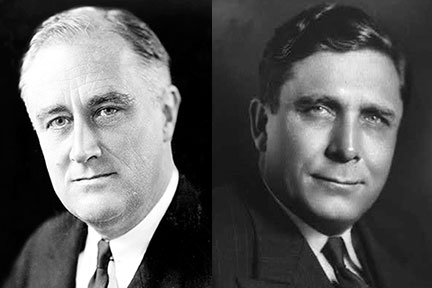
The Republican convention of 1940 resulted in one of the most significant upsets in election convention history. In early 1940, the leading candidates for the Republican nomination were: Senator Robert Taft and Thomas E. Dewey, the New York District Attorney. As the international situation became worse, with the fall of France, both Taft and Dewey were considered by many as too isolationist. Wendell Wilkie's candidacy was promoted. Wilkie, who was best known as a utility executive, and had opposed Roosevelt's TVA. Wilkie was an outspoken supporter of American support for the Allies. When the time came for the balloting, Dewey led on the first three ballots. However, the galleries demanded Wilkie. On the fourth ballot, Wilkie took the lead. Wendell Wilkie clinched the nomination on the fourth ballot.
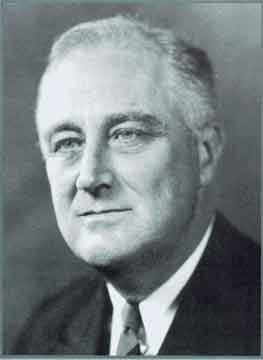
As the election of 1940 approached, the question arose as to whether Roosevelt would break with American tradition and run for a third term. The start of the war in Europe, in September 1939, persuaded Roosevelt to seek a third term. Roosevelt made it clear he was available for a draft by the Democratic party. The delegates at the Democratic convention chose to do just that.
The Republicans met in Philadelphia in June. There were three leading contenders for the Republican nomination. However, none of these leading candidates won. Instead, the party picked a political novice, Wendell Willkie. Wilkie was a Wall Street novice though he was charismatic and colorful.
Roosevelt ran on a platform of maximum aid to Great Britain, while at the same time pledging to keep American boys home. Amid the campaign, Roosevelt proposed the first peacetime draft in American history. The draft did not become an issue, as Willkie supported it.
Another of Roosevelt's actions did, however, become an issue. Churchill asked Roosevelt for 50 old World War I destroyers that the US had mothballed. After much hesitation, Roosevelt agreed to a transaction in which Britain would give the United States five bases in the Western hemisphere in return for the destroyers. Roosevelt took this action without Congressional approval. Willkie attacked the action. Roosevelt repeatedly promised that American boys would not have to fight overseas. At one point Willkie hearing Roosevelt make his pledge of "your boys are not going to be sent into a foreign war, stated to his brother: "That hypocritical son of a bitch! This is going to beat me." Roosevelt won, easily receiving 25 million votes to Willkie's 22 million.