Boeing B-47 Stratojet
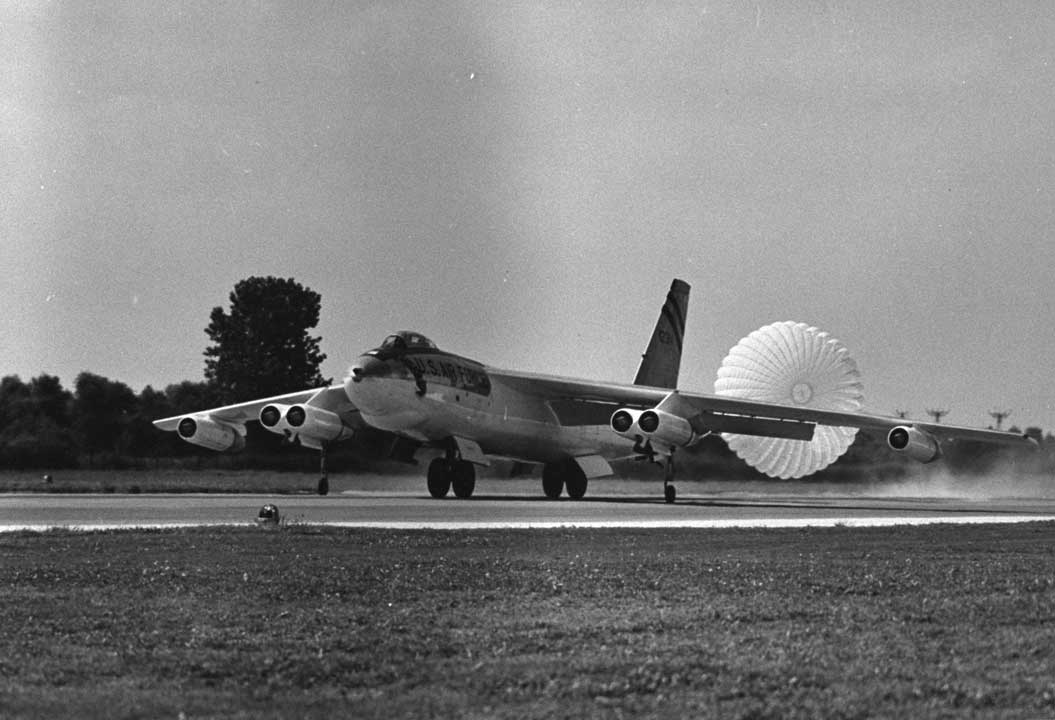
The Boeing B-47 Stratojet was a swept-wing, multi-jet strategic bomber that revolutionized bomber design and formed the backbone of Strategic Air Command in the 1950s. Going into service in 1951, it introduced features that would define jet aircraft for decades: a 35-degree swept wing, podded engines slung beneath the wing, and bicycle landing gear. Six General Electric J47 turbojets gave it near-fighter speed and performance unmatched by earlier bombers.
Designed to deliver nuclear weapons against the Soviet Union, the B-47 served as SAC's primary medium bomber until the larger B-52 supplanted it in the early-to-mid 1960s. More than 2,000 were built. Beyond the bomber role, reconnaissance and electronic-warfare variants flew demanding missions throughout the early Cold War, making the Stratojet one of the most influential aircraft of the jet age.
Specifications
- Manufacturer
- Boeing
- Type
- Strategic medium bomber
- Crew
- 3
- First Flight
- December 17, 1947
- Powerplant
- Six General Electric J47-GE-25 turbojets
- Max Speed
- 607 mph
- Range
- 4,000 mi
- Service Ceiling
- 33,100 ft
- Length
- 107 ft 1 in
- Wingspan
- 116 ft
- Loaded Weight
- 230,000 lb max takeoff
- Armament
- Two 20mm cannons in tail; up to 25,000 lb of bombs, nuclear or conventional