Lockheed P-38 Lightning
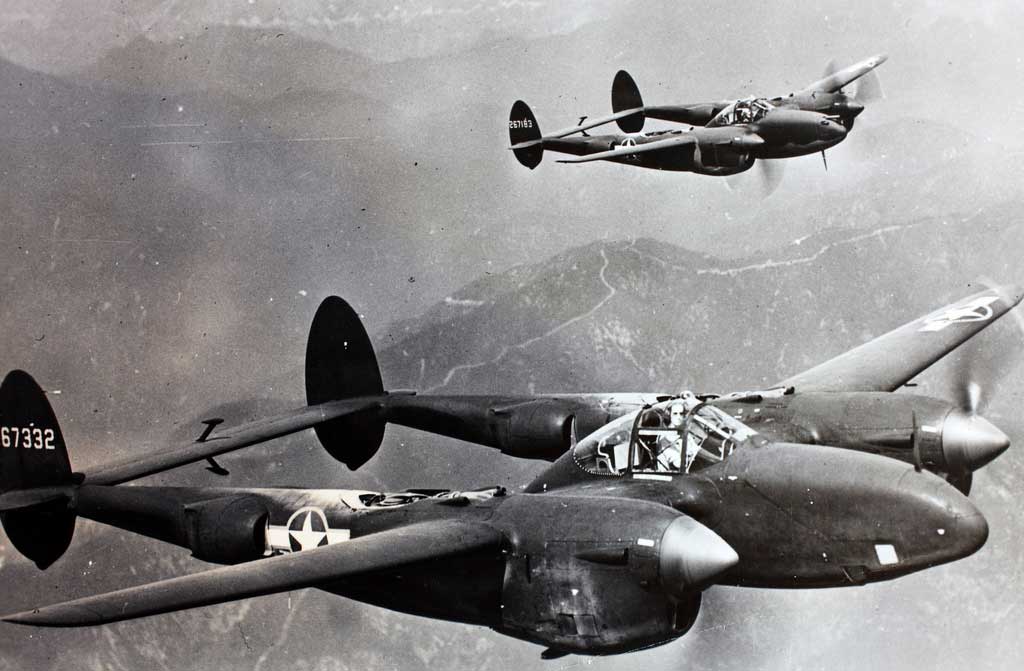
The Lockheed P-38 Lightning was a twin-engine, twin-boom American fighter and one of the most distinctive aircraft of World War II. Designed by Kelly Johnson's Lockheed team, it first flew in 1939 and entered service in 1941. Unusual for a fighter, it was powered by two turbo-supercharged Allison engines, giving it exceptional speed, high-altitude performance, and long range. The Lightning served in every theater as an interceptor, bomber escort, photo-reconnaissance platform, and ground-attack aircraft.
It excelled in the Pacific, where it downed more Japanese aircraft than any other US type and was flown by America's top aces Richard Bong and Thomas McGuire; P-38s also carried out the 1943 interception that killed Admiral Yamamoto. Roughly 10,000 were built, and the aircraft remained in front-line service through the end of the war.
Specifications
- Manufacturer
- Lockheed
- Type
- Single-seat twin-engine fighter
- Crew
- 1
- First Flight
- 1939
- Powerplant
- 2 × Allison V-1710 turbo-supercharged V-12s, 1,475 hp each (P-38L)
- Max Speed
- 414 mph
- Range
- 1,300 mi (combat); over 2,000 mi with drop tanks
- Service Ceiling
- 44,000 ft
- Length
- 37 ft 10 in
- Wingspan
- 52 ft
- Loaded Weight
- 21,600 lb (max takeoff)
- Armament
- 1 × 20 mm cannon, 4 × .50 in machine guns; up to 4,000 lb of bombs or rockets