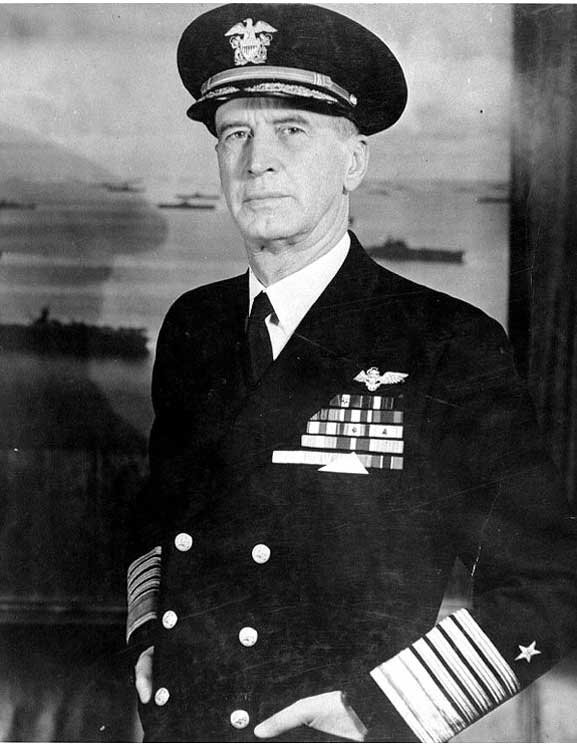
Ernest King was the formidable American admiral who served as Commander-in-Chief of the United States Fleet and Chief of Naval Operations throughout the Second World War, directing the navy's global war effort. Born in Lorain, Ohio, he graduated near the top of his class at the Naval Academy and built a long and varied career, gaining experience in surface ships, submarines, and naval aviation — an unusually broad background.
King had a reputation as a brilliant, demanding, and notoriously abrasive officer, a stern disciplinarian with little patience for incompetence. Shortly after the attack on Pearl Harbor, he was summoned to Washington and given supreme command of the navy, an immense responsibility he wielded with iron determination for the rest of the war.
As the navy's top officer and a member of the Joint Chiefs of Staff, King helped shape Allied grand strategy. A fierce advocate of the Pacific theater, he pressed for resources to fight Japan even as the broader Allied strategy emphasized defeating Germany first, and he oversaw the navy's enormous expansion into the most powerful fleet the world had ever seen.
He also championed the early offensive at Guadalcanal and the relentless submarine campaign that strangled Japanese shipping. Promoted to the five-star rank of fleet admiral, King retired after the Allied victory. Respected for his strategic grasp if not always loved for his temperament, he died in 1956.