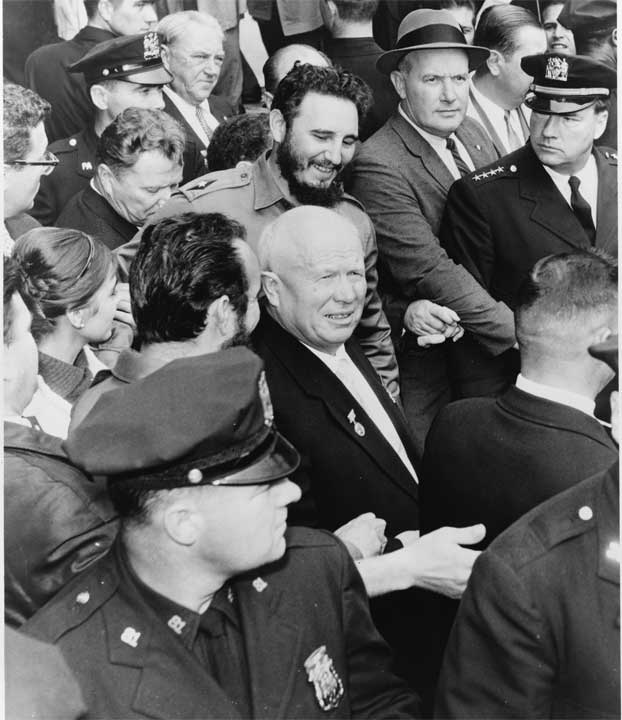
Nikita Khrushchev was the Soviet leader who denounced the crimes of Stalin, presided over a partial thaw at home, and brought the world to the brink of nuclear war in the Cuban Missile Crisis. Born to a peasant family in southern Russia, he worked as a metalworker before joining the Communist Party in 1918 and rising steadily through its ranks during the Stalin era, surviving the purges that destroyed so many of his contemporaries.
After Stalin's death in 1953, Khrushchev outmaneuvered his rivals to become the dominant Soviet leader. In a momentous "Secret Speech" to the party in 1956, he stunned the communist world by denouncing Stalin's cult of personality and his crimes — beginning a cautious process of "de-Stalinization" that eased some of the worst repression.
A blunt, earthy, impulsive man, Khrushchev pursued a contradictory mix of reform and bluster. He championed peaceful coexistence with the West yet provoked dangerous confrontations, building the Berlin Wall in 1961 and, the following year, secretly placing nuclear missiles in Cuba — a gamble that triggered the most perilous crisis of the Cold War before he agreed to withdraw them.
His erratic leadership, agricultural failures, and the humiliation of the Cuban climbdown alienated his colleagues. In 1964 he was ousted in a bloodless coup and forced into retirement — a notable change from the Stalin years, when such a fall would have meant death. He lived quietly until his death in 1971.