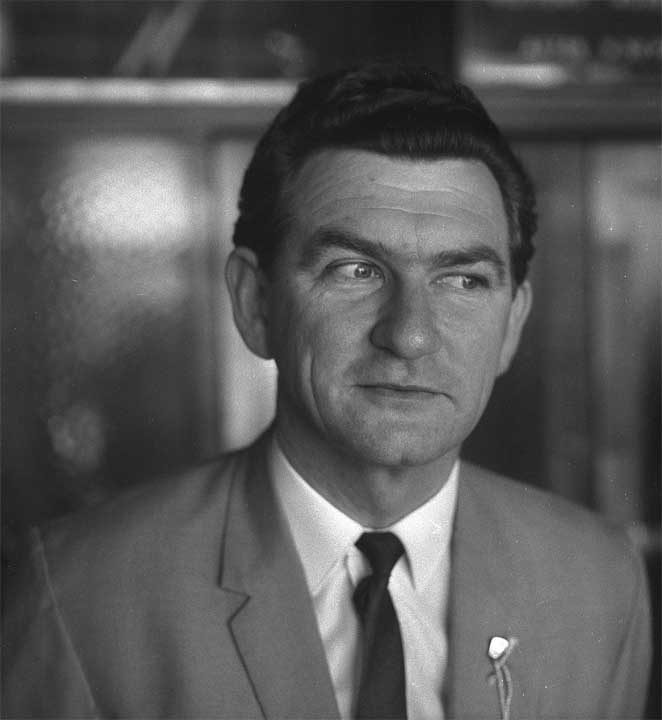
Bob Hawke was one of Australia's most popular and successful prime ministers, a charismatic Labor leader who governed for most of the 1980s and reshaped the nation's economy. Born in the small town of Bordertown, South Australia, he was a brilliant student who studied law and economics and won a Rhodes Scholarship to Oxford, where he reputedly set a record for the speed of drinking a yard of ale — an early sign of the larrikin charm that endeared him to ordinary Australians.
Hawke first became a national figure as a trade union leader, serving for a decade as president of the Australian Council of Trade Unions, where he gained a reputation as a tough but skilled negotiator. He entered Parliament in 1980 and within three years had become leader of the Labor Party and then prime minister.
As prime minister from 1983, Hawke proved a pragmatic reformer. Working closely with his treasurer Paul Keating, he modernized the Australian economy — floating the currency, deregulating the financial system, and opening the country to global competition — while preserving social programs and forging consensus between business and labor through a distinctive accord with the unions.
A consensus-builder of immense personal popularity, he won four elections and introduced landmark measures in health care, education, and the environment. He was eventually replaced as leader by Keating in 1991. Hawke remained a beloved elder statesman of Australian public life until his death in 2019.