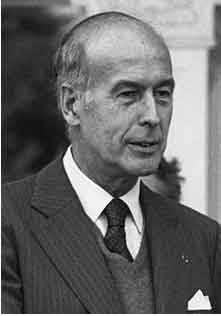
Valéry Giscard d'Estaing was the president of France for a single term in the 1970s, a brilliant and patrician technocrat who sought to modernize French society and advance the unity of Europe. Born in Koblenz, in French-occupied Germany, into a well-connected family, he was educated at France's most elite schools, fought in the final campaign of the Second World War, and entered public life as a financial expert in the upper reaches of the state.
A gifted economist, Giscard served for years as finance minister under Presidents de Gaulle and Pompidou, gaining a reputation as one of the ablest figures of his generation. In 1974, upon Pompidou's death, he was elected president at the relatively young age of forty-eight, defeating his Socialist rival narrowly.
As president, Giscard pursued an agenda of social liberalization, lowering the voting age, easing divorce laws, and legalizing abortion, while trying to project a more modern, less remote image of the presidency. Abroad, he was a committed European, forging a close partnership with the West German chancellor Helmut Schmidt that drove forward European integration and helped lay the groundwork for the institutions of a more united Europe.
His presidency was buffeted by economic troubles following the oil shocks of the decade, and in 1981 he was defeated for re-election by the Socialist François Mitterrand. In later years he remained active in European affairs, notably chairing the convention that drafted a proposed constitution for the European Union. He died in 2020.