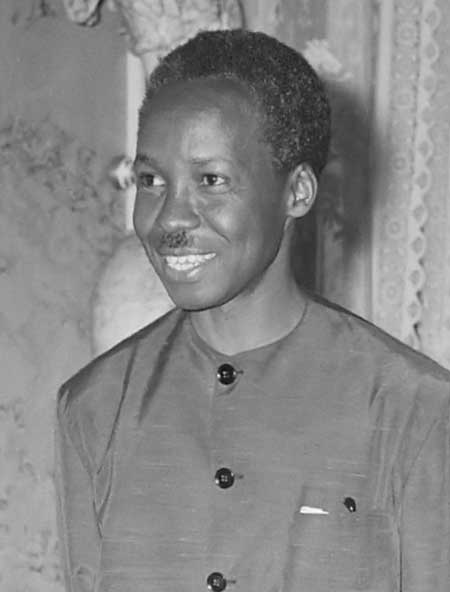
Julius Nyerere was the founding father and first president of Tanzania, a revered African statesman known as "Mwalimu," the teacher, who led his country to independence and pursued a distinctive vision of African socialism. Born the son of a chief in what was then the British territory of Tanganyika, he trained as a teacher and went on to study at universities in Uganda and Scotland, becoming one of the first of his people to be educated abroad.
Returning home, Nyerere devoted himself to the cause of independence, building a mass nationalist movement and leading Tanganyika peacefully to freedom in 1961. He became the new nation's first leader, and after the island of Zanzibar united with the mainland, he presided over the creation of Tanzania.
As president he set out to build a uniquely African form of socialism, which he called "Ujamaa," or familyhood, set out in the famous Arusha Declaration of 1967. He nationalized key industries, promoted self-reliance, and resettled much of the rural population into communal villages. His program won admiration for its idealism, its emphasis on equality and education, and its success in forging national unity among many ethnic groups, but its economic results were largely disappointing.
On the international stage Nyerere was a leading voice of pan-Africanism and of the struggle against colonialism and apartheid in southern Africa. Admired for his personal integrity and humility, he voluntarily stepped down from power in 1985, a rare example among African leaders, and died in 1999.