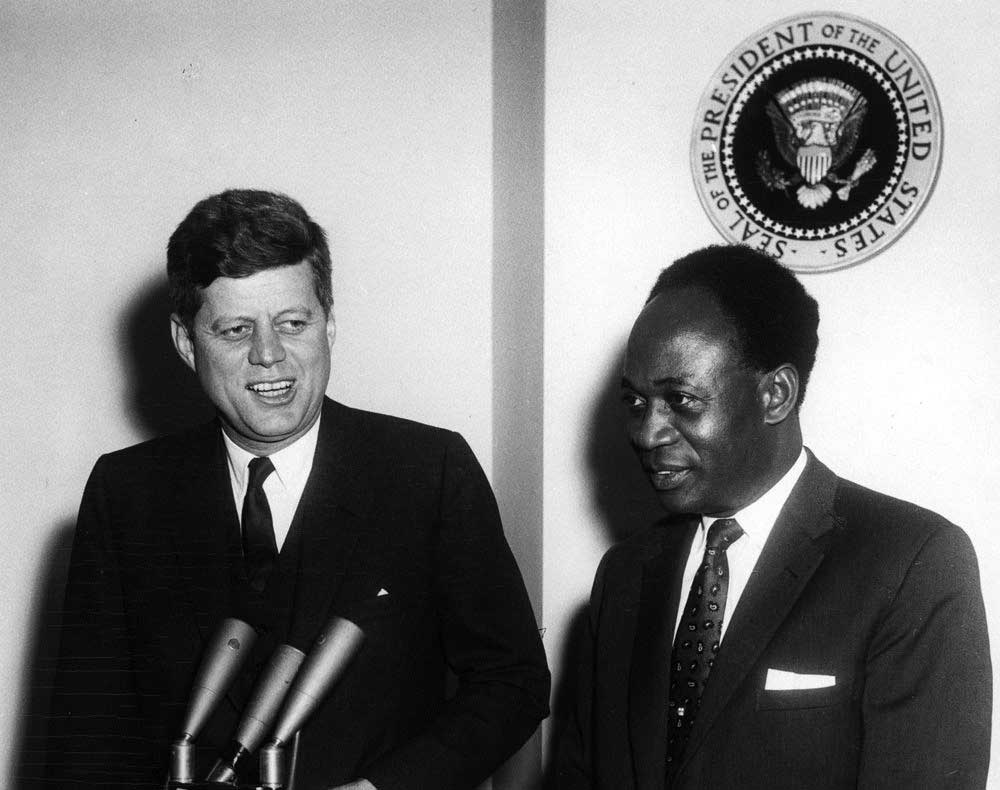
Kwame Nkrumah was the independence leader who made Ghana the first colony in sub-Saharan Africa to win freedom from European rule, and one of the foremost prophets of pan-African unity. Born in the British Gold Coast, he was educated in Catholic mission schools and then spent a formative decade studying in the United States and Britain, where he embraced socialism, anti-colonialism, and the dream of a united Africa.
Returning home after the Second World War, Nkrumah built a mass political movement, the Convention People's Party, and led a campaign of strikes and civil disobedience — his strategy of "positive action" — that pressured Britain to concede self-government. When the Gold Coast became independent Ghana in 1957, he became its first prime minister, and in 1960 its first president, a moment hailed across the continent.
Nkrumah threw himself into the cause of African liberation and unity, helping found the Organization of African Unity and supporting movements against colonial and white-minority rule elsewhere.
At home, however, his rule grew steadily more authoritarian: he declared a one-party state, jailed opponents, and fostered a personality cult, while grandiose development schemes and economic mismanagement drained the treasury. In 1966, while he was visiting China, the army and police overthrew him. He spent his last years in exile in Guinea and died in 1972, his pan-African vision unfulfilled but his name honored throughout Africa.