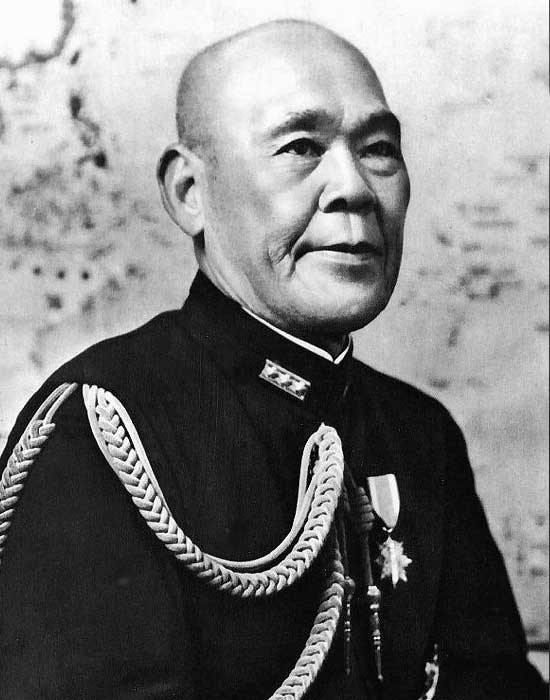
Osami Nagano was a senior Japanese admiral who, as chief of the Navy General Staff, bore major responsibility for Japan's decision to go to war against the United States in 1941. Born in Kochi, Japan, he graduated from the Imperial Japanese Naval Academy and, unusually, studied law at Harvard University, giving him firsthand knowledge of the country he would help lead Japan to fight.
Nagano rose steadily through the naval hierarchy, serving as a naval attaché in Washington, as Japan's representative at disarmament conferences, and as navy minister. In 1941 he became chief of the Navy General Staff, the highest operational post in the Imperial Navy.
In that role he gave crucial approval to Admiral Yamamoto's plan for the surprise attack on Pearl Harbor, judging that Japan's only hope against the far stronger United States lay in a swift, decisive blow. He continued to direct overall naval strategy through the early Japanese victories and the subsequent tide of defeats, until he was replaced in 1944 as the war turned hopeless.
After Japan's surrender, Nagano was arrested and charged as a major war criminal before the International Military Tribunal for the Far East in Tokyo. He died in 1947 while the trial was still in progress, before a verdict could be reached.