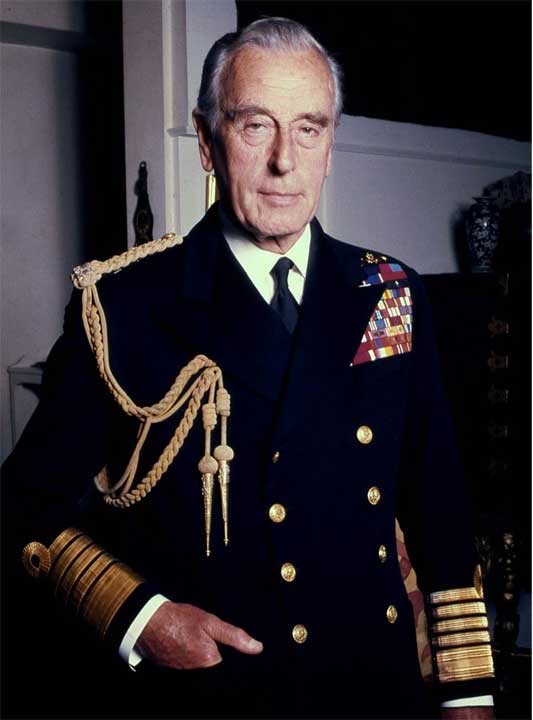
Louis Mountbatten, Earl Mountbatten of Burma, was a British admiral, wartime commander, and statesman who served as the last viceroy of India and presided over the end of British rule there. A great-grandson of Queen Victoria and a member of the royal family, he chose a naval career and rose to prominence as a dashing and ambitious officer.
During the Second World War he commanded ships in action, headed Combined Operations — overseeing commando raids and planning for the invasion of Europe — and then served as Supreme Allied Commander in South East Asia, directing the long and difficult campaign that drove the Japanese from Burma. His energy, charm, and flair for leadership made him one of Britain's most celebrated wartime figures.
In 1947 he was appointed the last viceroy of India, charged with overseeing Britain's withdrawal from its largest colony. He presided over the swift and fateful partition of the subcontinent into India and Pakistan and the granting of independence — a transfer of power accompanied by the joy of freedom and by horrific communal violence and mass migration.
After Indian independence he returned to the navy, eventually rising to the highest military post as Chief of the Defence Staff. A respected elder of the royal family and a mentor to the young Prince Charles, Mountbatten was assassinated in 1979 when the Irish Republican Army planted a bomb on his fishing boat off the coast of Ireland.