Samuel Adams was born in Boston, Massachusetts, in 1722 into a prominent, deeply religious merchant family. After graduating from Harvard College, he struggled to find success in the business world, famously mismanaging a loan from his father and failing as both a maltster and a city tax collector. However, Adams found his true calling in the turbulent arena of Boston politics. As Great Britain began imposing unpopular levies on the American colonies in the 1760s, Adams emerged as an early, passionate defender of colonial rights, arguing that taxation without representation violated their fundamental liberties. Throughout the escalation of tensions leading up to the American Revolution, Adams proved to be a masterful political organizer and propagandist. He was a leading voice in the Sons of Liberty and used his sharp pen to rally public sentiment against British policies through numerous newspaper essays. Adams played a pivotal role in organizing protests against the Stamp Act and the Townshend Acts, and he was a key coordinator behind the famous Boston Tea Party in 1773. His ability to mobilize the masses and link various colonies together through the Committees of Correspondence made him one of the most influential leaders of the patriot movement. When the Revolutionary War broke out, Adams served as a prominent delegate to the Continental Congress, where he passionately advocated for total separation from Britain and ultimately signed the Declaration of Independence. Following the war, he shifted his focus toward structuring the new nation, helping to draft the Massachusetts Constitution of 1780. Though initially skeptical of a strong centralized federal government, he eventually supported the U.S. Constitution and later served as the Governor of Massachusetts from 1794 to 1797. He passed away in 1803, remembered as a fierce, unyielding guardian of American liberty.
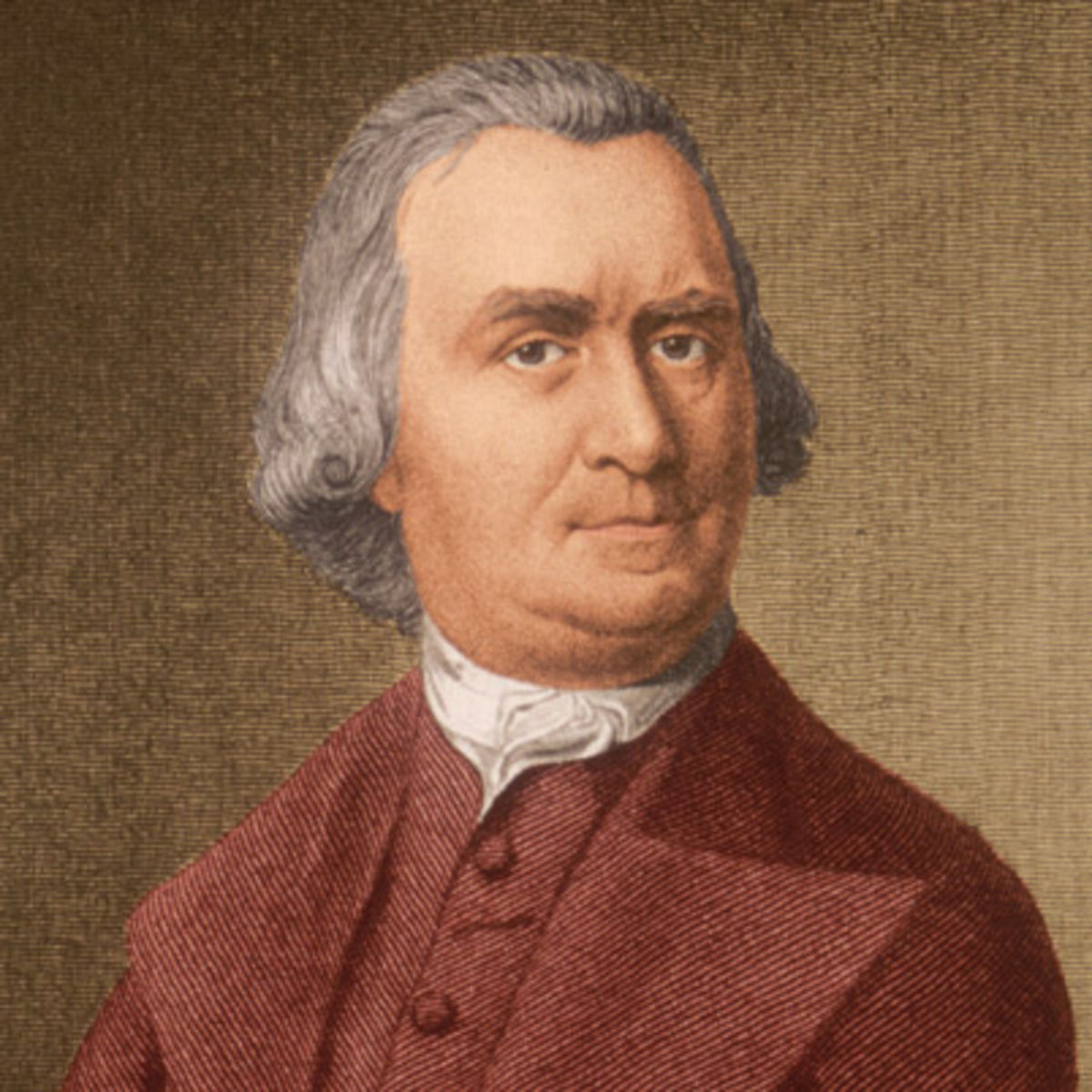
portrait — Samuel Adams
Samuel Adams
1722–1803 · Leader of Sons of Liberty, Governor of Massachusetts
Samuel Adams was a pivotal American Founding Father who catalyzed the colonial independence movement through his fierce philosophical opposition to British taxation. As a brilliant political organizer and leader of the Sons of Liberty, he helped orchestrate defining revolutionary milestones, including the Boston Tea Party. He later signed the Declaration of Independence and served as Governor of Massachusetts, cementing his legacy as an essential architect of American liberty.