USS California CGN-36
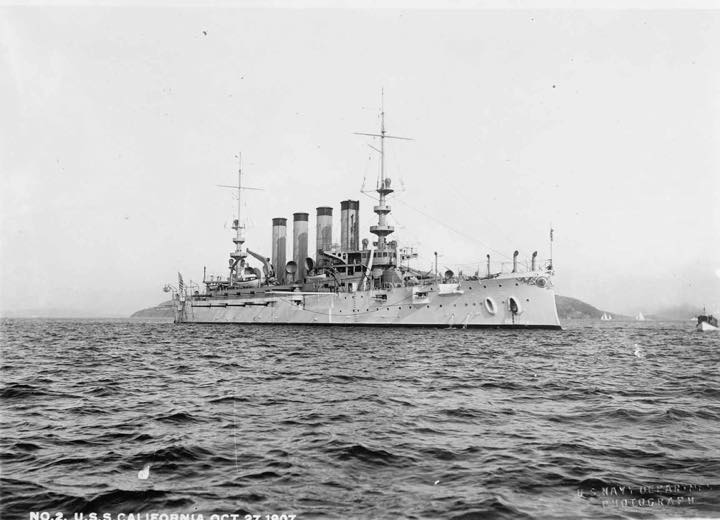
California II ACR: dp. 13,680, 1. 603'11": b. 69'7", dr. 24'1", B. 22 k.; cpl. 829; a. 4 8", 14 6", 18 3", 2 18" tt.; cl. Pennsylvania)
The second California (Armored Cruiser 6) was launched 28 April 1904 by Union Iron Works, San Francisco, Calif.; sponsored by Miss F. Pardee, and commissioned 1 August 1907, Captain V. L. Cottman in command.
California was renamed San Diego on 1 September 1914, and served as flagship for Commander-in-Chief,Pacific Fleet, intermittently until a boiler explosion put her in Mare Island Navy Yard in reduced commission through the summer of 1915. San Diego returned to duty as flagship through 12 February 1917, when she went into reserve status until the opening of World War I. Placed in full commission 7 April, the cruiser operated as flagship for Commander, Patrol Force, Pacific Fleet, until 18 July when she was ordered to the Atlantic Fleet. Reaching Hampton Roads, VA., 4 August, she joined Cruiser Division 2, and later broke the flag of Commander, Cruiser Force, Atlantic, which she flew until 19 September.
San Diego's essential mission was the escort of convoys through the first dangerous leg of their passages to Europe. Based on Tompkinsville, N.Y., and Halifax, N.S., she operated in the weather-torn, submarine infested North Atlantic safely convoying all of her charges to the ocean escort. On 19 July 1918, bound from Portsmouth, N.H., to New York, San Diego was torpedoed by the German submarine U-156 southeast of Fire Island. The cruiser sank in 28 minutes with the loss of 6 lives, the only major warship lost by the United States in World War I.
<script async src="//pagead2.googlesyndication.com/pagead/js/.