From Saigon to Hồ Chí Minh City: A City Shaped by History
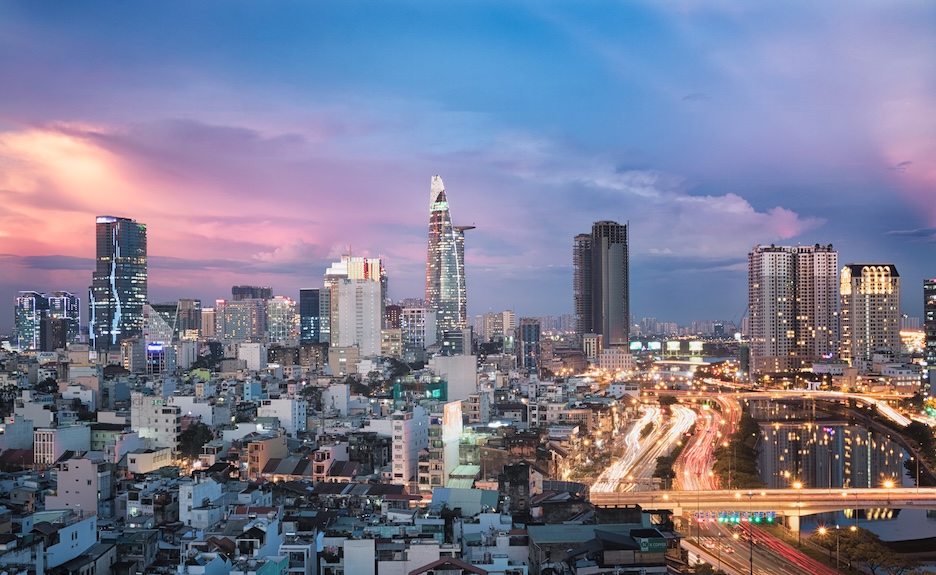
Walk Saigon’s streets and its melting-pot identity is everywhere — French loaves cradle Asian and European fillings in the bánh mì, hawkers tote croquembouche towers with a local twist, and bánh flan shares menus with phở and cơm tấm. Life carries on against crumbling French facades, vendor-crammed streets, and glittering skyscrapers that tell the story of a city still rapidly developing — it saw record-breaking growth of 9.86% in the third quarter of 2026. Today it’s Hồ Chí Minh City. But it wasn’t always…
Hồ Chí Minh City (Saigon) Over the Years
Before the 17th Century — Back to Cambodia
Before the 17th century, Hồ Chí Minh City was a Cambodian city known as “Prey Nôkôr” — “Forest City.” The Trịnh–Nguyễn civil war reshaped it, drawing waves of Vietnamese refugees and settlers. Rather than turning the newcomers away, Cambodian King Chey Chettha II let Vietnamese settlers stay — even building them a custom tax house at Prey Nôkôr in the 1620s. Chinese and Malay traders added to the city’s growing mix.
17th-19th Century — The Vietnamese Gain Control
Over time, Vietnamese settlers outnumbered Prey Nôkôr’s Cambodian population, shifting the balance of power and setting the stage for Vietnamese rule. In 1698, lord administrator Nguyễn Hữu Cảnh — sent by the southern Vietnamese Nguyễn lords — took formal administrative control of Prey Nôkôr, officially renaming the city “Gia Định.” He also annexed it and established military garrisons.
“Gia Định” didn’t last, though. The name that endured was Sài Gòn. Its exact origins are hotly debated by historians, but Vietnamese documents record it as far back as 1776 — nearly a century before the 1862 Treaty of Saigon. The most popular theory is that Sài translates to “firewood” or “twigs,” and Gòn means the “kapok tree” (bông gòn) — early settlers may have called the region the “land of kapok trees.” Some linguists also believe “Sài Gòn” is a phonetic adaptation, a “Vietnamization” of the original Cambodian pronunciation of “Forest City.”
19th-20th Century — The French Take Over
The name Saigon stuck under French rule, which began on February 17, 1859, when a joint Franco-Spanish force captured the city during the Cochinchina Campaign and made it the capital of French Cochinchina.
1940-1945 — Japanese Occupation During WWII
Saigon’s status as a French colony lasted almost a century. But after France fell to Nazi Germany in 1940, Japanese troops entered French Indochina, occupying Saigon from September 1940 to August 1945 — with the French administration left nominally in charge until the war’s final months.
1945-1975 — Independence From France, Then American Influence
The Việt Minh — a communist-led coalition founded in 1941 by Hồ Chí Minh — seized power in 1945, proclaiming the Democratic Republic of Vietnam. The French, unwilling to surrender their territory, attacked Việt Minh forces in Haiphong in November 1946, sparking nearly a decade of war against the colonial power.
The 1954 Geneva Accords finally ended French rule, but Vietnam remained divided. Saigon became the capital of the anti-communist Republic of Vietnam (South Vietnam) — a French administrative hub turned American-backed city — until it fell to North Vietnamese forces two decades later.
End of the 20th Century — North and South Vietnam Are Reunified
After the US withdrawal under the 1973 Paris Peace Accords, the People’s Army of Vietnam captured Saigon in April 1975. A year later, Vietnam was officially reunified as the Socialist Republic of Vietnam — and Saigon was renamed Hồ Chí Minh City in honor of its revolutionary leader, ending its decades as a separate southern capital.
Reunification brought upheaval — re-education camps, seized assets, and a command economy that, compounded by embargoes and border wars, triggered a severe crisis.
Recovery came in 1986 with the Đổi Mới (renovation) reforms: Vietnam swapped strict central planning for a socialist-oriented market economy open to private enterprise and foreign investment, while the Communist Party kept sole political control.
Into the 21st Century — A Fast-Developing Nation
Vietnam remains a one-party communist state, but its market reforms opened the door to global trade, normalizing relations with the United States in 1995 and joining the World Trade Organization in 2007. That shift has driven the country’s remarkable growth.
Travel Advice for Hồ Chí Minh City
All that history isn’t just in textbooks — it’s standing on every block, waiting to be walked through. While you’re in town, make time for:
- Exploring the historic War Remnants Museum.
- Visiting the Reunification Palace.
- Walking through the bustling Ben Thanh Market.
- Eating bánh mì, bánh flan, cơm tấm, and phở.
- Seeing the white tigers at Saigon Zoo.
- Touring the Cu Chi tunnels.
If you’re visiting to see these sites yourself, an eSIM for Vietnam is worth sorting out before departure — in a city where streets have been renamed more than once, reliable maps and translation apps come in handy.
Final Thoughts
Today, the city wears its scars, achievements, and heart on its sleeve. It’s a hub for travelers drawn by its food, landmarks, and layered past and for expats drawn by its low costs and high quality of life. Prey Nôkôr, Gia Định, Saigon, Hồ Chí Minh City — four names, one unforgettable city.