McDonnell Douglas F/A-18 Hornet
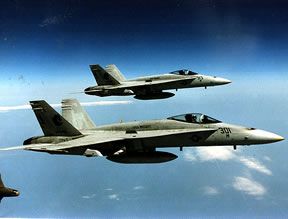
The McDonnell Douglas F/A-18 Hornet is a twin-engine, carrier-capable strike fighter and the U.S. Navy's first true "strike-fighter," combining fighter and attack roles in a single airframe. Derived from the lightweight fighter competition that also produced the F-16, it first flew in November 1978 and became operational in the early 1980s. The Hornet was designed for both air-to-air and air-to-ground missions, switching between roles in flight, and proved highly reliable and easy to maintain.
It serves in single-seat (A/C) and two-seat (B/D) versions and is famously flown by the Navy's Blue Angels demonstration team. During Operation Desert Storm, Hornets shot down enemy fighters and then bombed targets on the same mission. Powered by two General Electric F404 turbofans and armed with a 20mm cannon and a wide range of missiles and bombs, the Hornet has been exported to numerous allied nations and was later developed into the larger F/A-18E/F Super Hornet.
Specifications
- Manufacturer
- McDonnell Douglas
- Type
- Carrier-based strike fighter
- Crew
- 1 (2 in B/D models)
- First Flight
- November 18, 1978
- Powerplant
- 2 x General Electric F404-GE-402 turbofans, 17,700 lbf each
- Max Speed
- Mach 1.7+ (approx. 1,190 mph)
- Range
- 1,089 nautical miles (combat)
- Service Ceiling
- 50,000+ ft
- Length
- 56 ft
- Wingspan
- 40 ft 5 in
- Loaded Weight
- 51,900 lb (max takeoff)
- Armament
- 1 x 20mm M61 cannon plus AIM-9, AIM-7, AIM-120, Harpoon, HARM, Maverick missiles and various bombs