Lockheed C-130 Hercules
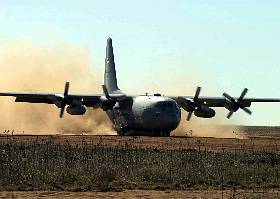
The C-130 Hercules is a four-engine turboprop military transport designed and built by Lockheed (now Lockheed Martin). First flown in 1954 and entering service in 1956, it was conceived for tactical airlift, able to operate from short, rough, unpaved strips while airdropping or landing troops and equipment in forward areas. Its rear loading ramp accommodates oversized cargo from helicopters and armored vehicles to palletized loads and personnel.
Successive models, from the original C-130A through the B, E, H and the modernized J, have served airlift, aeromedical, weather reconnaissance, aerial firefighting, Antarctic resupply and disaster-relief roles. The C-130J introduced new Rolls-Royce engines with six-bladed composite propellers, a two-pilot glass cockpit and substantial performance gains, with the stretched C-130J-30 adding 15 feet of fuselage. One of the longest-serving and most widely exported aircraft in history, the Hercules remains in production decades after its debut.
Specifications
- Manufacturer
- Lockheed Martin Aeronautics Company
- Type
- Tactical military transport
- Crew
- C-130J: 3 (two pilots, loadmaster); earlier models 4-6
- First Flight
- August 23, 1954
- Powerplant
- 4 turboprops (C-130H: Allison T56-A-15, 4,591 shp; C-130J: Rolls-Royce AE 2100D3, 4,700 shp)
- Max Speed
- Approx. 366 kn (417 mph; 671 km/h), C-130J
- Range
- Approx. 2,360 nautical miles (4,370 km) with maximum payload, C-130J
- Service Ceiling
- Approx. 28,000 ft (8,615 m) with 42,000 lb payload
- Length
- C-130E/H/J: 97 ft 9 in (29.8 m); C-130J-30: 112 ft 9 in (34.4 m)
- Wingspan
- 132 ft 7 in (40.4 m)
- Loaded Weight
- Max takeoff approx. 155,000 lb (70,300 kg)