Martin B-57 Canberra
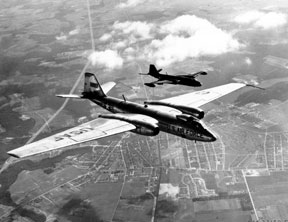
The Martin B-57 Canberra was a twin-jet tactical bomber and reconnaissance aircraft built under license from Britain's English Electric Canberra, the first American operational warplane based on a foreign design. The Martin-built version first flew in 1953 and entered U.S. Air Force service in 1954, with American modifications including a redesigned canopy, rotary bomb door, and provision for wingtip stores. Powered by two Wright J65 turbojets, the B-57 served as a night intruder and tactical bomber and saw extensive combat in the Vietnam War.
Specialized high-altitude reconnaissance variants, the RB-57D and the dramatically enlarged-wing RB-57F, flew strategic reconnaissance and atmospheric sampling missions at extreme altitudes during the Cold War. Versatile and long-lived, some Canberra airframes continued in research and survey roles, with NASA still operating WB-57 high-altitude aircraft decades later.
Specifications
- Manufacturer
- Martin
- Type
- Tactical bomber and reconnaissance aircraft
- Crew
- 2
- First Flight
- July 20, 1953
- Powerplant
- Two Wright J65 turbojets, 7,220 lb thrust each
- Max Speed
- 582 mph
- Range
- 2,100 mi
- Service Ceiling
- 48,000 ft
- Length
- 65 ft 6 in
- Wingspan
- 64 ft
- Armament
- Up to 5,000 lb of bombs internally plus underwing ordnance