Consolidated NY-2 Husky
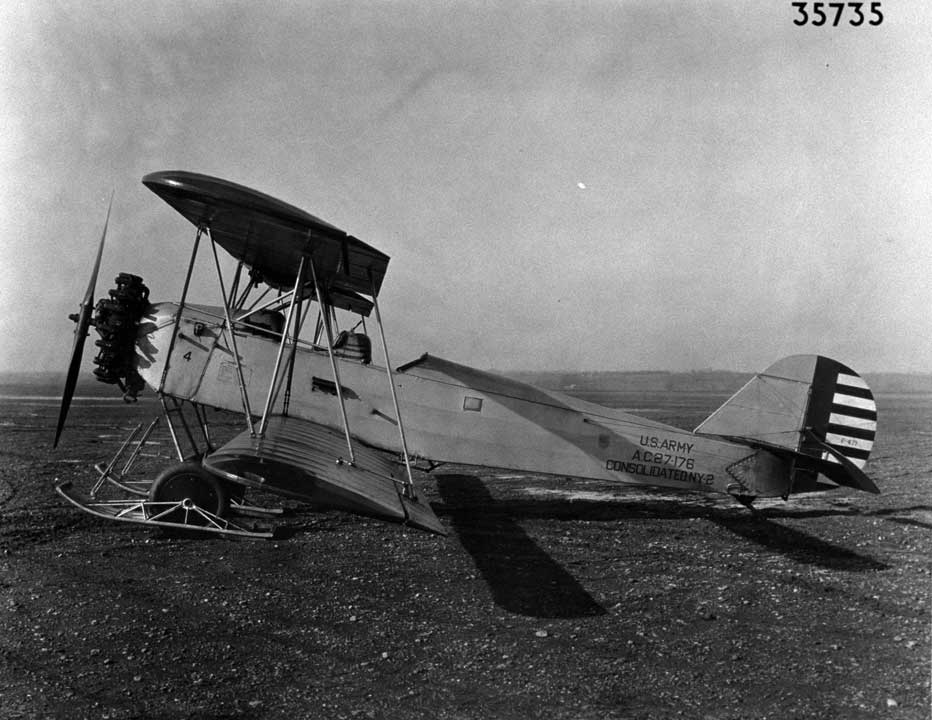
The Consolidated NY-2 was a single-engine, two-seat biplane primary trainer built for the U.S. Navy during the 1920s. Part of the long-running Husky family that descended from the Army's PT-1 Trusty, the NY series became the Navy's standard primary trainer of the era. The NY-2 introduced a longer-span wing to reduce wing loading and was powered by a 220 hp Wright J-5 Whirlwind radial, replacing the lower-powered engines of earlier models.
The Navy ordered 181 NY-2s, and the type served widely from the late 1920s, with examples remaining in front-line and reserve training units into the 1930s. Rugged, forgiving, and well suited to instruction, the NY taught a generation of naval aviators the basics of flight. It is perhaps best remembered as the aircraft Jimmy Doolittle used in 1929 for pioneering blind-flying (instrument) experiments.
Specifications
- Manufacturer
- Consolidated Aircraft
- Type
- Primary trainer (biplane)
- Crew
- 2
- First Flight
- 1926 (NY-2)
- Powerplant
- 1 x 220 hp Wright J-5 Whirlwind radial
- Max Speed
- 96 mph
- Service Ceiling
- 12,300 ft
- Length
- 28 ft
- Wingspan
- 40 ft
- Loaded Weight
- 2,400 lb (gross)