Treaty of Paris Signed
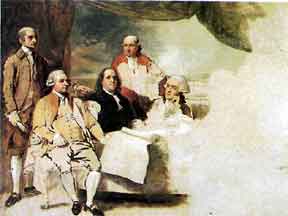
The Treaty of Paris of 1783 brought a formal end to the American War of Independence, which had begun in 1775 with fighting between Britain and its thirteen rebellious colonies. After the decisive American and French victory at Yorktown in 1781, the British government opened negotiations, recognizing that the war could not be won. The American delegation included Benjamin Franklin, John Adams, and John Jay.
Signed on September 3, 1783, the treaty established that Great Britain recognized the independence of the United States. It set generous boundaries for the new nation, extending west to the Mississippi River, north toward the Great Lakes, and south to Spanish Florida. The agreement also addressed fishing rights off Newfoundland, the repayment of prewar debts, and the treatment of American Loyalists.
The Treaty of Paris secured the territorial foundation of the United States and confirmed its place among independent nations. Its terms, however, left unresolved tensions, including disputes over the western frontier and British forts that remained on American soil. The vast territory gained set the stage for decades of westward expansion and renewed conflict with Native American peoples and rival European powers.