Cartier Claims Canada for France
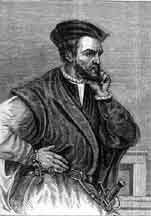
Jacques Cartier was a navigator from Saint-Malo who sailed under the patronage of King Francis I of France in search of a northwest passage to Asia and of new lands and riches. On his first voyage in 1534 he explored the Gulf of St. Lawrence, planting a cross on the Gaspe Peninsula and claiming the territory for the French crown, an act that marked the beginning of France's interest in North America.
On a second voyage in 1535 he sailed up the St. Lawrence River, the great waterway leading into the heart of the continent, reaching the Iroquoian villages of Stadacona, near present-day Quebec City, and Hochelaga, at the site of modern Montreal. His expeditions gave Europe its first detailed knowledge of the river system that would become the main artery of New France.
Cartier found neither a passage to Asia nor the gold he sought, and early attempts at settlement failed amid harsh winters, scurvy, and conflict with the indigenous inhabitants. Even so, his voyages established the French claim to Canada and charted the river route that later explorers and colonists such as Samuel de Champlain would use to build the colony of New France in the following century.