Treaty of Picquinty
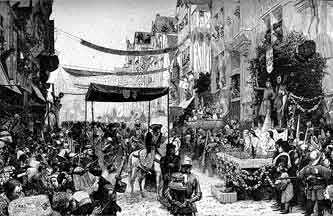
In 1475 Edward IV of England launched an invasion of France, reviving the old English claim to the French crown and acting in concert with his ally Charles the Bold, Duke of Burgundy, who was then at odds with the French king. Edward crossed the Channel with a large and well-equipped army, intending to renew the kind of campaign that had marked the Hundred Years' War.
The expected support from Burgundy failed to materialize as Charles the Bold pursued his own quarrels elsewhere, leaving Edward's invasion without firm footing. King Louis XI of France, preferring negotiation to battle, opened talks with the English king. The two monarchs met and concluded the Treaty of Picquigny in 1475, by which Edward agreed to withdraw his army from France in exchange for substantial financial inducements.
Under the treaty Louis XI paid Edward a large lump sum and promised a sizable annual pension, effectively buying off the English invasion. The agreement, sometimes regarded as marking the practical end of the Hundred Years' War, allowed Edward to return home enriched and without bloodshed. It demonstrated Louis XI's shrewd diplomacy and left Charles the Bold isolated, contributing to the duke's downfall soon afterward.