Decembrist Uprising
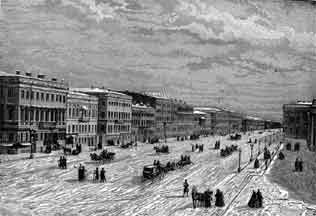
The Decembrist movement arose among young, reform-minded officers of the Russian aristocracy, many of whom had served in the campaigns against Napoleon and been exposed to liberal and constitutional ideas circulating in Western Europe. Organized in secret societies, they hoped to limit autocratic power, introduce constitutional government, and in some cases abolish serfdom, viewing Russia's rigid order as increasingly out of step with the age.
The death of Tsar Alexander I in late 1825 created a confused succession, as the throne passed unexpectedly to his younger brother Nicholas rather than to Constantine. Seizing the moment of uncertainty, the conspirators led troops into Senate Square in St. Petersburg on 14 December 1825 (Old Style), refusing to swear allegiance to Nicholas I. The poorly coordinated revolt was swiftly surrounded and crushed by loyal forces using artillery.
Though brief and unsuccessful, the Decembrist uprising had lasting consequences. Five leaders were executed and many others exiled to Siberia, while the new tsar, Nicholas I, drew from the episode a deep distrust of reform and instituted a reign marked by censorship and repression. The Decembrists nonetheless became revered as forerunners of the Russian revolutionary tradition, an early sign of the challenges that would confront Romanov rule.