Bach Composes "Brandenburg Concertos"
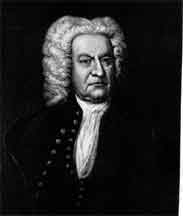
Johann Sebastian Bach (1685-1750) was a German composer and organist whose mastery of counterpoint placed him among the towering figures of the Baroque era. While serving as Kapellmeister at the court of Anhalt-Cothen, he assembled in 1721 a set of six instrumental works that he dedicated to Christian Ludwig, Margrave of Brandenburg, from whom they take their familiar name, the Brandenburg Concertos.
Each of the six concertos employs a distinct combination of instruments, exploring the concerto grosso form in which a small group of soloists is set against a larger ensemble. Their inventive scoring, rhythmic vitality, and contrapuntal richness have made them among the most celebrated orchestral compositions of the eighteenth century.
During the same productive years Bach completed the first book of The Well-Tempered Clavier in 1722, a collection of preludes and fugues in all twenty-four major and minor keys; he assembled a second book around 1740. Together these cycles demonstrated the possibilities of keyboard tuning and became foundational teaching works for generations of musicians.