War Between Peru and Colombia Breaks Out
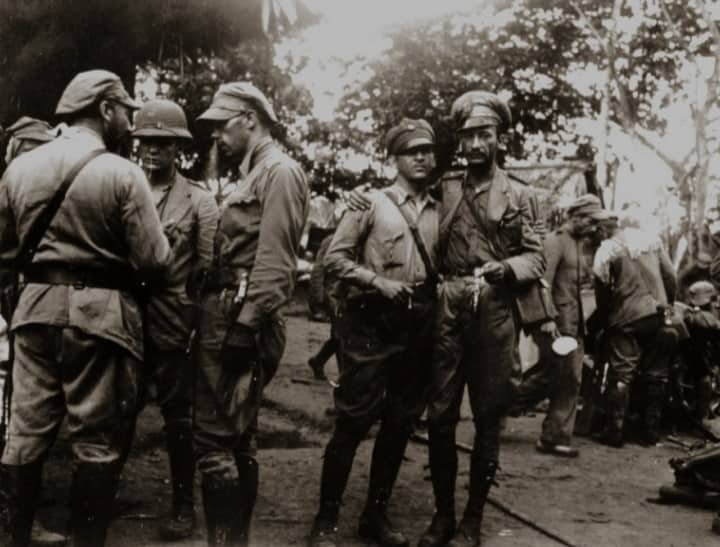
The Colombia–Peru War, also known as the Leticia Incident, broke out on September 1, 1932, when roughly two hundred armed Peruvians seized the Amazon river port of Leticia and drove out its Colombian authorities. Leticia had been ceded to Colombia under the 1922 Salomón–Lozano Treaty — an arrangement many Peruvians resented — and its capture pulled the two nations into a jungle war that lasted until a truce in May 1933.
On September 1, 1932, a band of about two hundred Peruvian civilians and soldiers crossed into the remote Amazon town of Leticia, imprisoned and expelled its Colombian officials, and claimed the port for Peru. The prize was small but symbolically charged: under the 1922 Salomón–Lozano Treaty, Peru had ceded the so-called Leticia Trapezium — and with it Colombia's only direct outlet to the Amazon River — a concession long unpopular in Peru, where the town had been founded and its rubber trade once run. President Luis Sánchez Cerro had not ordered the raid and was reportedly caught off guard by it, but a surge of nationalist feeling left him unwilling to disown it. Within weeks Bogotá answered by mobilizing a river-and-air expedition to retake the town, and the two governments slid into open hostilities. What followed was a strange, logistically punishing conflict fought across thousands of miles of rainforest, where distance and disease were as dangerous as gunfire. Peru blockaded stretches of the river while Colombia ferried troops and aircraft up the Amazon, with skirmishes flaring at Tarapacá and elsewhere into early 1933. The war's end owed as much to politics in Lima as to the battlefield: after Sánchez Cerro was assassinated on April 30, 1933, his successor Óscar Benavides moved quickly toward peace, and a truce on May 24 placed Leticia under a League of Nations commission — one of the few times the League actually governed disputed territory itself. The 1934 Rio de Janeiro Protocol reaffirmed the original treaty and returned Leticia to Colombia, where it remains the country's foothold on the Amazon to this day. This account draws on U.S. State Department records of the dispute and standard histories of the Leticia Incident. Can you find me an illustration on line that I can use Identified reliable licensing source for historical illustrations Identified reliable licensing source for historical illustrations perunorth iperu warhistory Results from the web (opens in new tab) Here are a few candidates for the Leticia Incident / 1932 Colombia–Peru War — mostly period maps of the disputed Amazon "trapezium," which tend to reproduce well in a timeline entry. One important caveat, since you publish: the images surfaced above come from assorted sites and I can't vouch for their reuse rights. For something you can safely put in print or on HistoryCentral, the cleanest route is a public-domain or Creative Commons source. Two practical options: The most reliable is Wikimedia Commons — search "Leticia Incident" or "Colombia–Peru War" there. It hosts a labeled campaign map of the conflict and several 1932-era photographs, each with its license (public domain or CC) stated on the file page, so you know exactly what you're allowed to do. Anything produced by the Colombian or Peruvian governments in 1932, and most maps of that vintage, are generally in the public domain by now, but the Commons file page will tell you the specific status. The other good source is the U.S. State Department's Foreign Relations of the United States (FRUS) volumes for 1932–33, which are public-domain U.S. government documents and occasionally include reference maps of the Leticia region. If you tell me where it's going — a print book page, a web entry, or one of the apps — and whether you'd prefer a map, a troop photo, or a portrait (Sánchez Cerro or Vásquez Cobo), I can point you to a specific, correctly-licensed file rather than a general search..