Indians Go to the Reservations
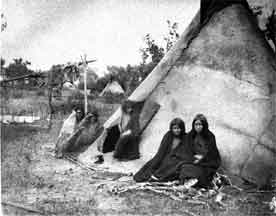
The reservation system became the central instrument of federal Indian policy in the nineteenth century—the means by which the United States confined Native nations to defined tracts of land and opened the rest of the continent to settlement. As the frontier pushed westward, treaty after treaty required nations to surrender most of their territory in exchange for a reserved remnant, government annuities, and promises of protection. What had begun as a way to separate Native peoples from settlers hardened, by mid-century, into a deliberate strategy of containment.
Life on the reservations was often grim. The lands set aside were frequently poor, the promised payments siphoned off by corrupt agents and traders, and the buffalo and other game on which many nations depended deliberately destroyed to force them into dependence. Federal authorities used the reservations to suppress Native religion and language and to push assimilation. Worse was to come with the Dawes Act of 1887, which broke up communally held reservation land into individual allotments and sold off the 'surplus,' stripping Native nations of roughly two-thirds of their remaining land over the following half-century.