Battles in the Northwest
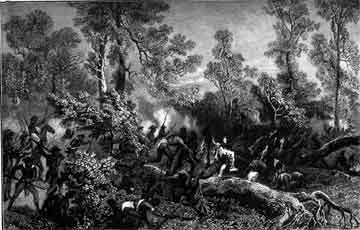
After the Revolution, the United States insisted on opening the Ohio country to settlement, but the confederated nations of the region—Shawnee, Miami, Delaware, and their allies under leaders such as the Miami war chief Little Turtle—were determined to hold the Ohio River as the boundary of their lands. The result was the Northwest Indian War, in which the young republic suffered two of the worst defeats the United States Army would ever experience at Native hands.
In 1790 a force under General Josiah Harmar was routed, and in 1791 the army of General Arthur St. Clair was nearly annihilated in an ambush that killed more than six hundred soldiers—the most lopsided defeat ever inflicted on the United States by Native forces. The government rebuilt its army under General Anthony Wayne, who drilled his troops carefully and in 1794 broke the confederacy at the Battle of Fallen Timbers. The following year the Treaty of Greenville forced the nations to cede most of present-day Ohio, opening the floodgates of settlement into the Old Northwest.