Gift Ideas for WWII and Military History Enthusiasts
My uncle had a shelf of books that told you exactly what kind of person he was: Antony Beevor's Stalingrad, Stephen Ambrose's Band of Brothers, and a worn paperback of Eisenhower's Crusade in Europe, among others. When you've got someone like that in your life, buying them a generic "WWII" coffee mug feels almost rude. They've earned something better. These ten picks are for the person who takes military history seriously.
10 Military History Gifts That Hold Up
1. A Trip to the National WWII Museum in New Orleans
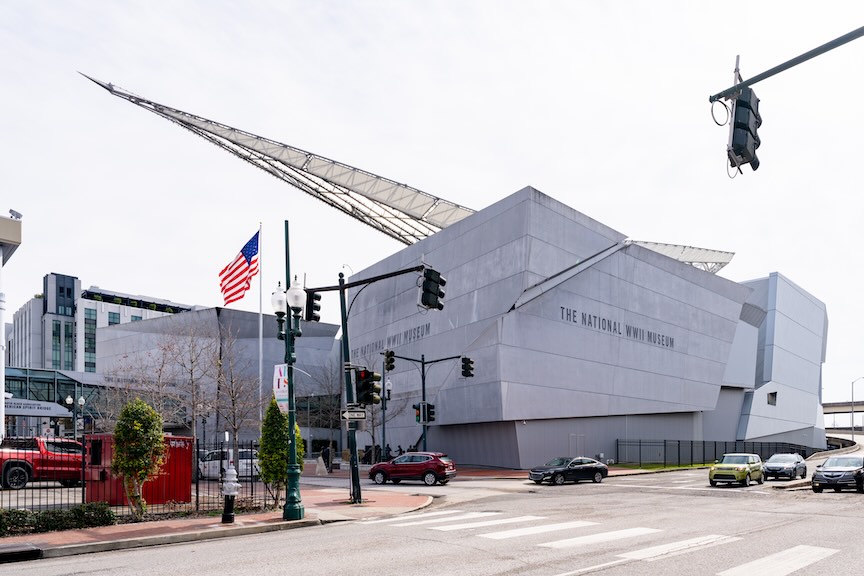
If they haven't been, this is non-negotiable. The National WWII Museum is not what people expect. The exhibits on the Pacific theater are as thorough as those on D-Day, there's a full-scale submarine, and the 4D film Beyond All Boundaries (narrated by none other than Tom Hanks) is arresting even for someone who has read extensively on the period. Plan two days. The museum runs speaker programs and evening events that attract a level of expertise you won't find in most public venues. It's in the Warehouse District, so the surrounding neighborhood is good for dinner after.
Nation Library of Scotland
2. A Copy of Antony Beevor's The Second World War
Antony Beevor's The Second World War is an 880-page single-volume history that covers every theater from the German invasion of Poland in September 1939 to the Japanese surrender in August 1945. Beevor's ability to cut from grand strategy to ground-level experience on the same page is what makes it worth reading even if your person has already read Stalingrad and Berlin separately. If they've been through Beevor, Rick Atkinson's three-part Liberation Trilogy covers the American experience in North Africa and Europe in a way that feels as close to narrative fiction as serious military history gets.
3. A Piece of Radioactive Trinitite Glass
There are few gifts that you can give that are legitimately still smoldering from their role in a historical event. Trinitite is the exception. On July 16, 1945, nuclear weapons were tested for the first time at the Trinity test site in New Mexico. The heat and pressure from the blast turned the desert floor into shards of radioactive glass. Collecting it from the site has been illegal for decades, but pieces gathered before the ban are legal to own and turn up through mineral and meteorite dealers, usually as small fragments running about $20 to $35 per gram, often sold with a certificate of authenticity. Atomic Rock Shop specializes in these shards, and that's where I sourced mine. Trinitite is faintly radioactive but well below any level of concern to handle.
4. A Trip to the National Museum of the United States Air Force
The National Museum of the U.S. Air Force at Wright-Patterson Air Force Base near Dayton, Ohio, is the world's largest military aviation museum. Free admission, free parking, and over 350 aircraft and missiles across more than 19 acres of indoor space. The WWII gallery includes a B-17 Flying Fortress you can walk through, a B-29, and a Memphis Belle restoration. The Presidential Aircraft gallery has Air Force One models going back to FDR's Sacred Cow. If you're within a reasonable drive of Ohio, this is a full day easily.
5. A Replica Enigma Machine
Surviving WWII-era Engima machines sell at auction for six figures. Working replicas can be had for $150 (for a DIY kit) through organizations like the Crypto Museum. Sure, you'll have to solder some pieces yourself, but in the end you'll have a working, whirring, encoding, decoding machine. Pair it with Andrew Hodges's Alan Turing: The Enigma or a membership to the Codebreaking Club, a club that sends you a cipher from the past each month, and you have given someone the machine and the story of the people who broke it.
6. A Tamiya Model Kit
Hear me out. Tamiya model kits are not toys. A 1:48 scale P-51D Mustang or a 1:700 scale USS Missouri requires hours of focused work, produces a historically accurate miniature, and gives someone who has read about the hardware a chance to understand its design at a tactile level. Tamiya kits come in difficulty grades; start a beginner with a 1:72 aircraft and a more experienced modeler with a 1:35 Sherman tank or a naval destroyer. A kit plus a decent set of model paints runs $40 to $80 and produces something they'll keep.
7. A Subscription To Letterjoy's Letters From Military History Series
Letterjoy mails weekly reproductions of real historical letters on premium stationery. Their Letters From Military History collection covers generals, admirals, aviators, and intelligence operatives: MacArthur writing from the Pacific, Eisenhower before D-Day, figures from both World Wars whose private correspondence reads nothing like their public record. Each letter arrives with "The Postscript," a short article giving background and context. For someone who has read every history of the campaign, getting the actual dispatches in their mailbox can be an almost-religious experience (Ask my dad).
8. Band of Brothers on Blu-ray
Blu ray? What year is this? Well, streaming devotee, if you want the full Band of Brothers experience, you're going to need a disk. Stephen Ambrose's oral history was the source material; the HBO miniseries is its own thing. Band of Brothers (2001, produced by Steven Spielberg and Tom Hanks) follows Easy Company, 506th Parachute Infantry Regiment, 101st Airborne Division from training through Bastogne to the Eagle's Nest in May 1945. The Blu-ray set includes extensive documentary material about the real veterans that the series interviewed that you won't find in the streaming version. The 10-episode run at 60 minutes each is an investment, but the result is as close as screen storytelling has come to what combat memoirs describe.
9. A copy of The Longest Day by Cornelius Ryan
The Longest Day (1959) reconstructed the D-Day landings through interviews with over 1,000 participants, German and Allied, military and civilian. Ryan spent six years on it and the result is still the definitive account of June 6, 1944 for accessibility and scope combined. If your person has read it, find them a copy of A Bridge Too Far, Ryan's account of Operation Market Garden, which is even more intricate and arguably better. Both are out in handsome hardcover editions worth owning.
10. A Subscription to Military History Magazine
For the reader who wants to stay current with primary-source discoveries, oral history projects, and historiographical debates, Military History magazine from HistoryNet runs solid long-form features across all periods of American military history. A year's subscription runs around $25. Get this for the person who reads war history the way some people read sports stats: systematically, with opinions about methodology.
What are the best gifts for WWII and military history enthusiasts?
The best gifts for a military history enthusiast go beyond the usual bestsellers and lean toward experiences, deep-cut references, and formats they wouldn't typically buy themselves. Museums worth a long drive, models that reward patience, books that historians actually argue about, and primary-source subscriptions that bring the correspondence home literally.
Frequently Asked Questions
What's the best WWII museum in the United States? The National WWII Museum in New Orleans is generally considered the best in terms of scope and depth. Plan for two full days. The Intrepid Museum in New York is the best option for the naval and carrier-aviation dimension.
What WWII book should I get for someone who has read everything? Antony Beevor's The Second World War works as a synthesis for someone who has read campaign-level histories but wants a single through-line. Rick Atkinson's Liberation Trilogy is the deeper dive for the American experience in Europe.
Are Tamiya models good gifts for adults? Yes. Tamiya makes historically researched kits in multiple scales and difficulty levels. A 1:48 or 1:72 WWII aircraft is a realistic starting point for an adult who wants a focused hobby without a huge investment.
What are real letters from WWII figures I can get as a gift? Letterjoy mails weekly reproductions of real historical letters, including correspondence from military figures. Their Letters From Military History collection is specifically focused on this category.
Is the National Museum of the U.S. Air Force free? Yes. The National Museum of the U.S. Air Force at Wright-Patterson AFB in Dayton, Ohio, is free to enter, including parking. It's the world's largest military aviation museum.