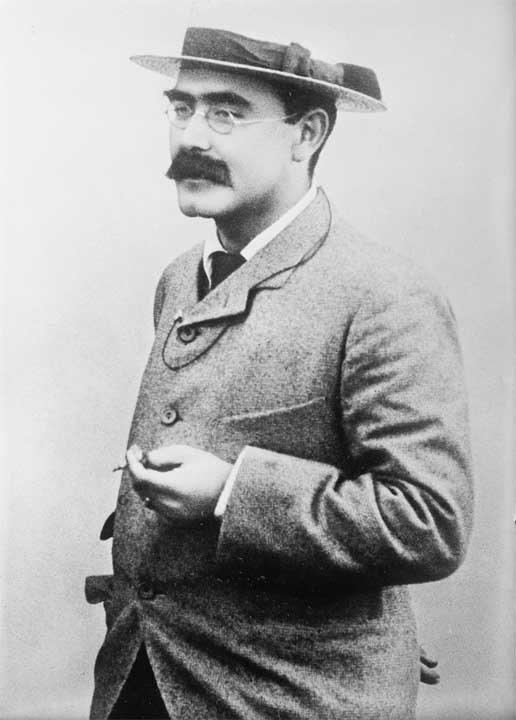
Rudyard Kipling was the English author and poet whose vivid tales of British India and unmatched gift for storytelling made him one of the most popular writers of his age and, in 1907, the first English-language winner of the Nobel Prize in Literature. Born in Bombay (Mumbai) to English parents, he spent an idyllic early childhood in India before being sent, unhappily, to school in England.
He returned to India as a young man to work as a journalist, and it was there that he found his voice. His early stories and verse — gathered in collections such as Plain Tales from the Hills and Barrack-Room Ballads — brought to life the soldiers, officials, and ordinary people of the British Raj with energy, humor, and a keen ear for vernacular speech.
Settling later in England and briefly in Vermont, Kipling produced the works that made him beloved: the children's classics The Jungle Book and Just So Stories, the novel Kim, and famous poems including "If—," "Gunga Din," and "Mandalay."
Often hailed in his lifetime as the bard of the British Empire — and later criticized as its apologist — Kipling was a more complex and melancholy figure than the label suggests, especially after his son John was killed in the First World War, a loss reflected in his bitter later verse. He died in London in 1936 and was buried in Poets' Corner in Westminster Abbey.