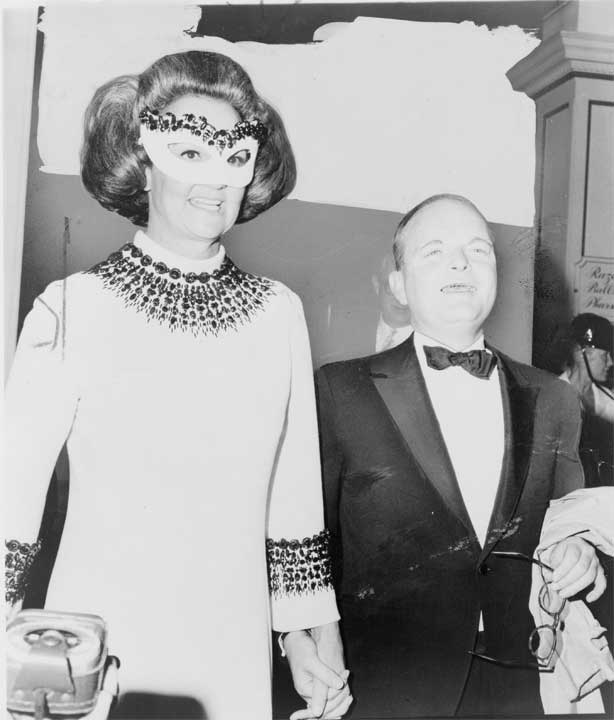
Katharine Graham was the publisher of The Washington Post who led it through some of the most dramatic episodes in the history of American journalism, becoming one of the most powerful women in the country. Born into a wealthy and prominent family — her father had bought the struggling Post — she was raised in privilege and worked briefly as a journalist before marrying Philip Graham, who took over the running of the newspaper.
For years Katharine lived in her husband's shadow, but after his death by suicide in 1963 she unexpectedly took control of the family company. Initially unsure of herself in a male-dominated world, she grew into a formidable and respected leader, transforming the Post into one of the nation's great newspapers and building the company into a major media enterprise.
Her courage was tested by two historic confrontations with the federal government. In 1971 she backed her editors' decision to publish the Pentagon Papers, the secret history of the Vietnam War, defying threats of legal action. Soon afterward she stood behind the Post's dogged investigation of the Watergate scandal, which ultimately brought down President Richard Nixon — a triumph of the free press that she made possible by refusing to be intimidated.
Graham led the Post for decades and became a celebrated figure in American public life. Her candid memoir, Personal History, won the Pulitzer Prize. She died in 2001, remembered as a pioneering woman executive and a champion of a free and fearless press.