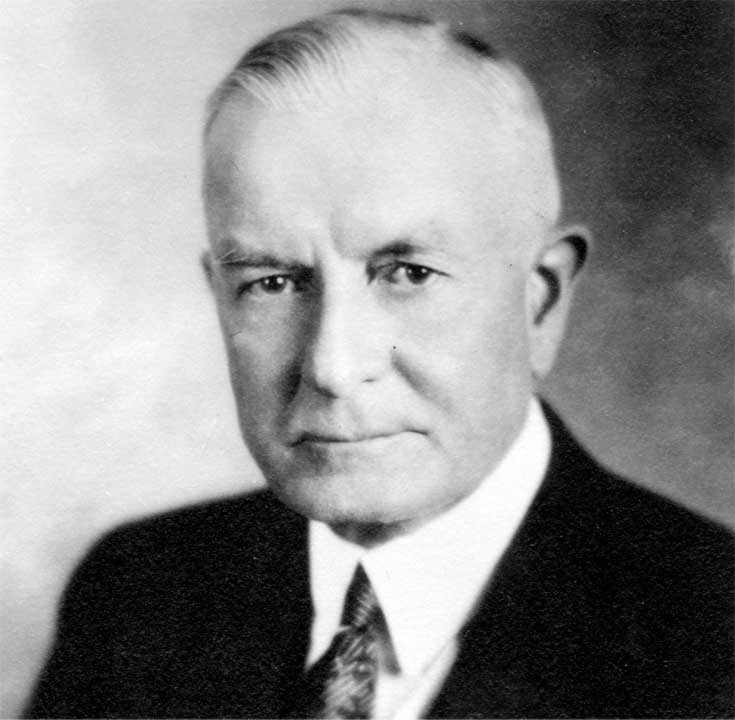
Thomas J. Watson was the American business executive who built the International Business Machines Corporation, IBM, into a global industrial giant and became one of the most influential businessmen of the twentieth century. Born in upstate New York, he began his career as a traveling salesman and then worked for the National Cash Register Company, where he absorbed the aggressive sales methods that would shape his own management style.
In 1914 Watson took charge of a small firm that made tabulating machines, scales, and time clocks, and over the following decades he transformed it into IBM, a powerhouse of the emerging information industry. He bet the company's future on data-processing technology, and its punched-card tabulating machines became indispensable to governments and corporations for handling vast quantities of information.
Watson built a distinctive and famously disciplined corporate culture. He demanded loyalty, dark suits, and clean living from his salesmen, motivated them with company songs and slogans — above all his one-word exhortation, "THINK" — and offered, in return, secure employment and generous rewards. His methods made IBM a model of the modern American corporation.
Under his leadership IBM prospered through the Great Depression and grew enormously during and after the Second World War, laying the foundations for its later dominance of the computer age. He handed the company to his son, Thomas Watson Jr., who would lead it into electronic computing. The elder Watson died in 1956, having created one of the world's great corporations.