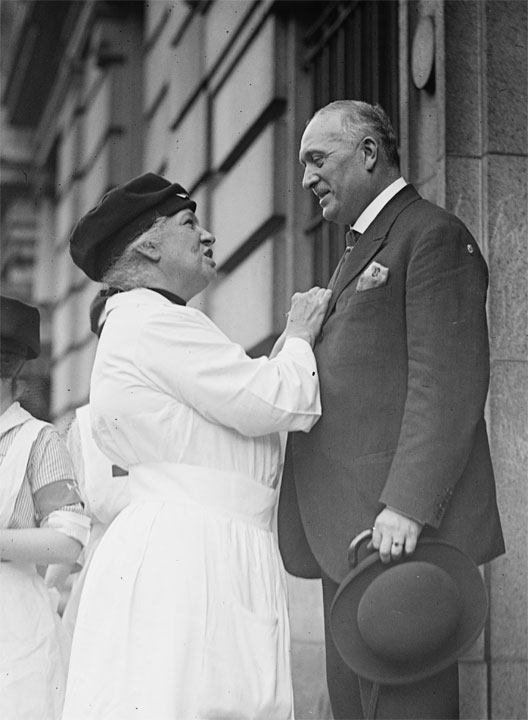
Ferdinand Foch was the French marshal who served as supreme commander of the Allied armies in the final, victorious year of the First World War. Born in Tarbes in the south of France, he joined the army as a young man and devoted himself to the study of military theory, becoming an influential teacher and writer at France's war college, where he preached the doctrine of the offensive and the importance of will and morale in battle.
When the First World War broke out, Foch commanded with distinction in the early battles, playing an important role in halting the German advance at the Marne in 1914 and in the desperate fighting in Flanders. The terrible costs of the war's offensives, however, tempered his early faith in the all-out attack.
His great moment came in the spring of 1918. As the Germans launched a series of massive offensives that threatened to break the Allied lines, the British and French agreed, at last, to unify their commands. Foch was appointed supreme Allied commander, coordinating the British, French, American, and Belgian armies, and he steadied the front through the crisis.
He then orchestrated the great counteroffensives of the late summer and autumn that drove the German armies back and forced them to seek an armistice. It was Foch who received the German surrender in a railway carriage in November 1918. Honored as a hero of the Allied victory, he died in 1929.