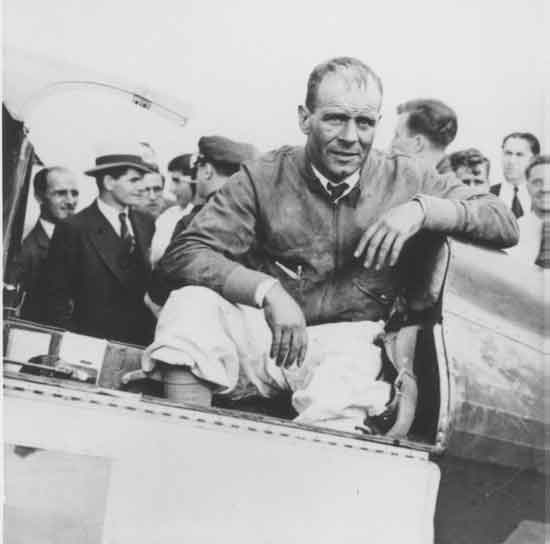
James "Jimmy" Doolittle was a daring American aviator and air-power pioneer who became a national hero in the Second World War for leading the first bombing raid on Japan. Born in California and raised partly in Alaska, he was a small, pugnacious man who combined a love of flying with serious scientific training, earning a doctorate in aeronautics and helping to advance the science of aviation between the wars.
In the 1920s and 1930s Doolittle was one of the most famous pilots in the world, setting speed records, winning air races, and pioneering instrument flying — the techniques that allowed pilots to fly safely in poor visibility, a fundamental advance for aviation. His blend of showmanship and engineering made him a celebrated figure of the golden age of flight.
His most legendary feat came in April 1942. Only months after the attack on Pearl Harbor, Doolittle led sixteen B-25 bombers off the deck of an aircraft carrier on a one-way raid against Tokyo and other Japanese cities. The damage was slight, but the daring "Doolittle Raid" stunned Japan, lifted American morale at a dark moment, and earned him the Medal of Honor.
He went on to command American air forces in North Africa, the Mediterranean, and Europe, leading the mighty Eighth Air Force in the strategic bombing campaign against Germany. He retired as one of the most respected airmen of his generation and died in 1993.