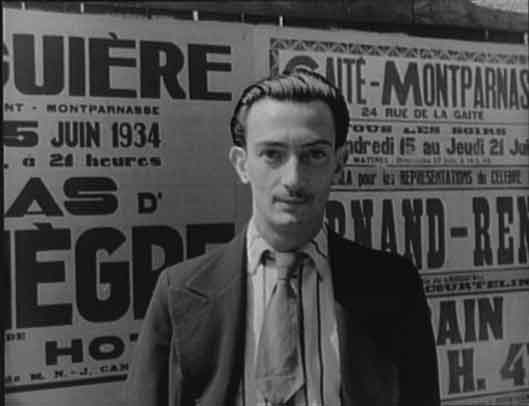
Salvador Dalí was the most famous and flamboyant of the Surrealist painters, a brilliant technician and shameless showman whose dreamlike images and outrageous public persona made him one of the most recognizable artists of the twentieth century. Born in Figueres, in the Catalan region of Spain, he showed extraordinary draftsmanship from an early age and trained at the Madrid academy, where he befriended the poet Federico García Lorca and the filmmaker Luis Buñuel.
In the late 1920s Dalí joined the Surrealist movement in Paris, contributing to it his "paranoiac-critical" method — a technique for summoning irrational, hallucinatory images from the unconscious. Painted with meticulous, old-master precision, his canvases of melting watches, distorted landscapes, and bizarre juxtapositions, above all The Persistence of Memory, became defining images of Surrealism.
Dalí was as celebrated for his self-promotion as for his art. With his waxed, upturned moustache and calculated eccentricity, he cultivated worldwide fame, designed jewelry, films, advertisements, and store windows, and proclaimed his own genius at every opportunity. His fellow Surrealists eventually expelled him, objecting to his commercialism and his refusal to condemn the Spanish dictator Franco.
Beyond Surrealism, he produced large religious and historical works in later decades and an outpouring of commercial and graphic art. He died in 1989 in his Catalan homeland, where a museum of his own design houses much of his work — a final monument to a relentless self-mythologizer.