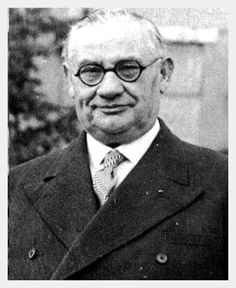
Ernest Bevin was one of the towering figures of British public life in the first half of the twentieth century — a self-made trade-union leader who became a powerful wartime minister and a forceful postwar foreign secretary. Born in poverty in rural Somerset and orphaned young, he had almost no formal schooling and worked as a laborer and drayman before finding his calling in the labor movement.
A natural organizer of immense energy and shrewdness, Bevin built the Transport and General Workers' Union into the largest trade union in the world and became one of the most influential figures in the Labour movement, though he never lost his suspicion of intellectuals.
During the Second World War, Winston Churchill brought him into the coalition government as Minister of Labour, where he mobilized the British workforce for the war effort with remarkable effectiveness.
When Labour won power in 1945, Bevin became foreign secretary, guiding British policy through the early Cold War. A staunch anti-communist, he was a principal architect of the Western alliance: he helped secure the Marshall Plan, was instrumental in the creation of NATO, and supported the Berlin airlift against the Soviet blockade. His handling of the end of the British mandate in Palestine was more troubled. Worn out by overwork and ill health, he died in office in 1951.