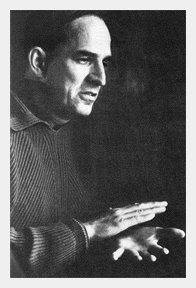
Ingmar Bergman was one of the most acclaimed and influential filmmakers in the history of cinema, a Swedish director whose intensely personal, philosophical films probed faith, death, loneliness, and the inner life with unmatched seriousness. Born in Uppsala, the son of a strict Lutheran clergyman, he grew up in an austere religious household whose shadows — guilt, silence, the search for God — would haunt his work throughout his life.
After studying at Stockholm University and working in the theater, where he became a major stage director, Bergman turned to film, and from the 1950s produced a remarkable series of masterpieces. The Seventh Seal, with its iconic image of a medieval knight playing chess with Death, and Wild Strawberries, a tender meditation on age and memory, brought him international fame.
Over the following decades he created an extraordinary body of work — Persona, Cries and Whispers, Fanny and Alexander among them — marked by spare, intense storytelling, profound psychological insight, and luminous black-and-white photography. He worked again and again with a devoted company of actors and with the cinematographer Sven Nykvist, and his films won numerous international awards.
Bergman's brooding exploration of the human condition made "Bergmanesque" a byword for serious, introspective cinema and influenced generations of directors. He continued to work in theater and film into old age, retreating to the lonely Baltic island of Fårö, where he died in 2007, revered as one of the supreme artists of the screen.