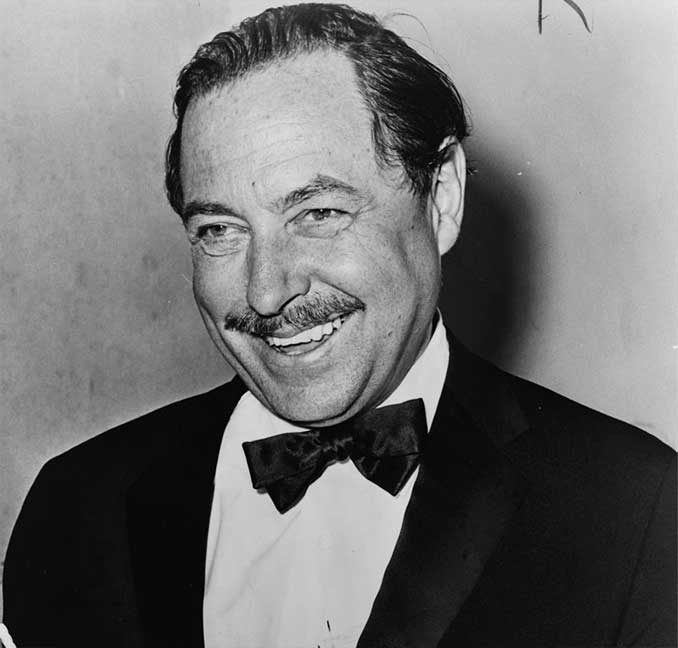
Tennessee Williams was one of the greatest American playwrights, the lyrical dramatist of desire, fragility, and human cruelty whose finest works rank among the masterpieces of the modern theater. Born Thomas Lanier Williams in Mississippi, he drew throughout his career on the genteel, decaying world of the American South and on the wounds of his own troubled family — including a beloved, mentally fragile sister who haunted his imagination.
After years of obscurity and odd jobs, Williams achieved sudden fame in 1945 with The Glass Menagerie, a tender "memory play" of a faded Southern mother and her crippled daughter. Two years later came A Streetcar Named Desire, with its unforgettable clash between the fragile, illusion-bound Blanche DuBois and the brutal Stanley Kowalski — a work that won the Pulitzer Prize and electrified Broadway.
Through the 1950s Williams produced a remarkable run of plays — Cat on a Hot Tin Roof, which won a second Pulitzer, The Rose Tattoo, Sweet Bird of Youth, and Suddenly Last Summer — combining poetic language with raw emotional power and frank treatment of sexuality, themes daring for their day.
Many were made into acclaimed films. His later years were darkened by depression, addiction, declining work, and grief, and his final plays met with critical failure. He died in a New York hotel in 1983, leaving behind a body of work of enduring beauty and pain.