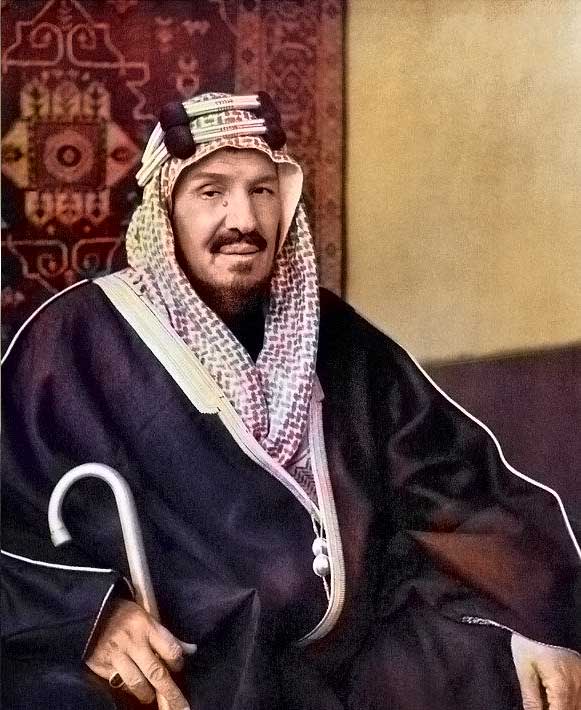
Ibn Saud — Abdulaziz Ibn Saud — was the warrior-statesman who united the warring tribes of the Arabian Peninsula and founded the kingdom of Saudi Arabia, which he ruled as its first king. Born into the House of Saud in Riyadh, he spent part of his childhood in exile in Kuwait after a rival dynasty drove his family from power.
As a young man he set out to reclaim his ancestral lands. In a daring raid in 1902 he recaptured Riyadh, and over the following three decades, through a combination of military skill, shrewd diplomacy, marriage alliances, and the zeal of his devout warriors, he steadily extended his control across the desert, conquering rival emirates and the holy cities of Mecca and Medina.
In 1932 he proclaimed the unified Kingdom of Saudi Arabia, with himself as its absolute monarch. He governed in close alliance with the austere Wahhabi religious establishment, whose strict interpretation of Islam underpinned his state, and he imposed order on a region long riven by tribal warfare.
The discovery of vast oil reserves in the 1930s transformed the prospects of his poor desert kingdom and forged a lasting strategic partnership with the United States. Ibn Saud lived to see the beginnings of the wealth that would make his country a power in world affairs. The founder of a dynasty whose many sons would rule after him, he died in 1953.