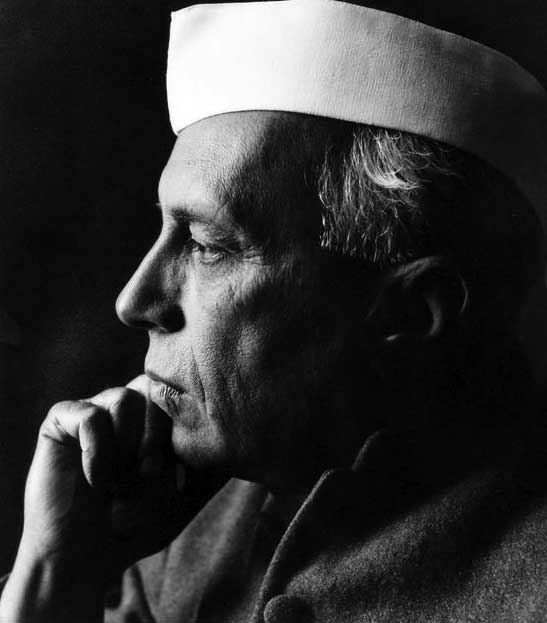
Jawaharlal Nehru was the first prime minister of independent India and, with Mahatma Gandhi, one of the principal architects of the world's largest democracy. Born into a wealthy and prominent family in Allahabad, he was educated in England at Harrow and Cambridge and trained as a barrister before returning to India and joining the independence movement.
Drawn to Gandhi, Nehru became his foremost lieutenant and the rising star of the Indian National Congress, blending Gandhi's moral force with his own socialist, secular, and modernizing vision. He spent years in British prisons for his role in the struggle for freedom, using the time to write history and reflect on his country's future.
When India won independence in 1947 — amid the joy of liberation and the agony of partition — Nehru became its first prime minister, a post he held until his death seventeen years later. He laid the foundations of the new nation: parliamentary democracy, a secular state in a land of many faiths, state-led industrial development, and a planned economy.
In foreign affairs he was a leader of the non-aligned movement, steering India between the Cold War blocs. His later years were shadowed by economic difficulties and by a humiliating border war with China in 1962. He died in office in 1964. His daughter Indira Gandhi and grandson Rajiv would later lead India in turn.