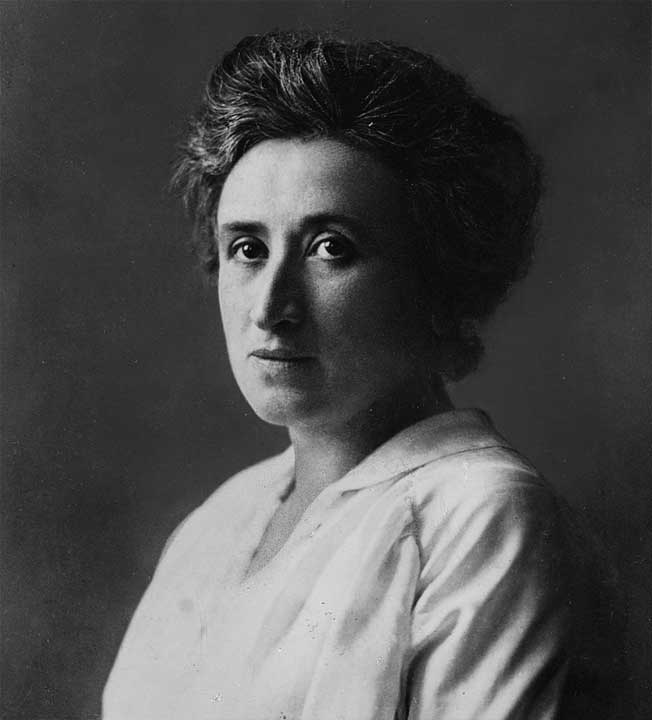
Rosa Luxemburg was one of the most brilliant and influential revolutionary socialists of her generation, a theorist, agitator, and martyr whose ideas continue to shape debates on the left. Born to a Jewish family in Russian-ruled Poland, she became a socialist as a teenager and, to escape arrest, fled to Switzerland, where she earned a doctorate before settling in Germany and joining its powerful Social Democratic Party.
A formidable thinker and a spellbinding orator, Luxemburg became a leading voice of the party's revolutionary left wing. She wrote influential works on economics, imperialism, and revolution, and clashed with the party's more moderate, reformist leaders, insisting that socialism could be won only through mass action and the revolutionary self-activity of the working class.
She was a passionate opponent of militarism and war. When the German Social Democrats voted to support their country's entry into the First World War, Luxemburg broke with them in disgust and, with Karl Liebknecht, founded the radical Spartacus League, spending much of the war in prison for her anti-war agitation.
After Germany's defeat and the revolution of 1918, the Spartacists became the new German Communist Party. In January 1919 they were drawn into a doomed uprising in Berlin. In the brutal crackdown that followed, Luxemburg and Liebknecht were seized by right-wing paramilitary troops, beaten, and murdered. Her death made her an enduring icon of revolutionary socialism.