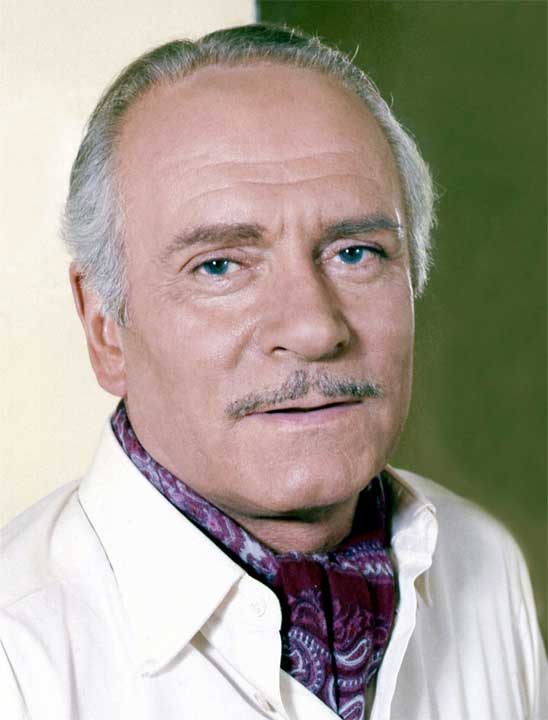
Laurence Olivier was widely regarded as the greatest actor of the twentieth century, a commanding stage and screen performer whose versatility, technical mastery, and theatrical daring redefined classical acting. Born in Dorking, England, the son of a clergyman, he trained in London and rose rapidly through the theater of the 1930s to become its leading classical actor.
Olivier made his reputation above all in Shakespeare, bringing physical vigor and psychological insight to roles such as Hamlet, Henry V, Richard III, and Othello. He could move with equal command between the heights of tragedy and the broad comedy of the music hall, and his performances were marked by a restless inventiveness that set him apart from his more measured contemporaries.
He carried his Shakespeare to the screen, directing and starring in acclaimed films of Henry V, Hamlet — which won the Academy Award for Best Picture — and Richard III, becoming a popular international film star as well as a stage legend. He also gave memorable performances in films ranging from Wuthering Heights to Marathon Man.
Olivier was the founding director of Britain's National Theatre, which he led through its early years, and the largest auditorium of its eventual home was named in his honor. Showered with honors, he was knighted and later made a life peer — the first actor to be so elevated. He died in 1989, the embodiment of the English acting tradition at its grandest.