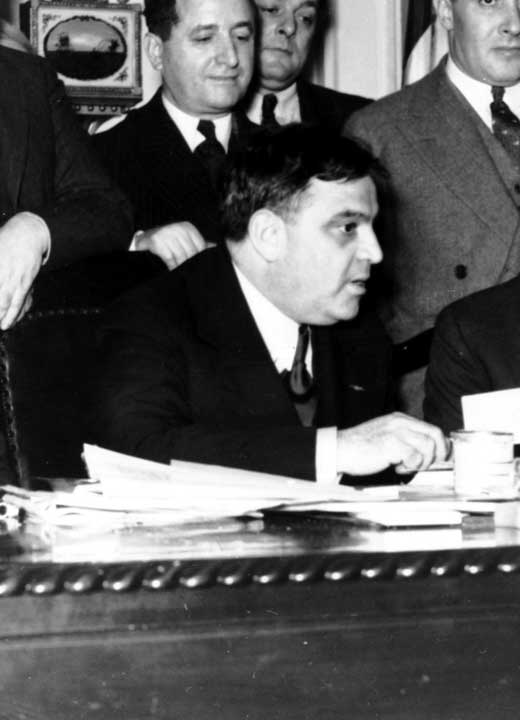
Fiorello La Guardia was one of the most colorful and effective mayors in the history of New York City, a fiery, diminutive reformer affectionately known as the "Little Flower" who battled corruption and remade the life of the metropolis during the Great Depression. Born in New York to an Italian father and a Jewish mother, he grew up partly in Arizona, worked as an immigration interpreter, and trained as a lawyer before entering politics.
He served in Congress as a progressive Republican, championing the causes of working people, immigrants, and the poor, and earning a reputation as an energetic crusader against privilege. In 1933, running as a reform candidate against the corrupt Tammany Hall political machine, he was elected mayor of New York, an office he would hold for three terms.
As mayor La Guardia transformed the city. Honest, tireless, and incorruptible, he rooted out graft, modernized the city government, and used federal New Deal funds to build parks, bridges, airports, housing, schools, and hospitals on an enormous scale. A populist showman, he famously read the comic strips aloud over the radio to children during a newspaper strike.
Energetic and combative, fluent in several languages, and beloved by the city's diverse immigrant communities, La Guardia became a national symbol of clean, activist government. He left office in 1945 and briefly led the international relief organization aiding postwar refugees. He died in 1947, and one of New York's airports bears his name to this day.