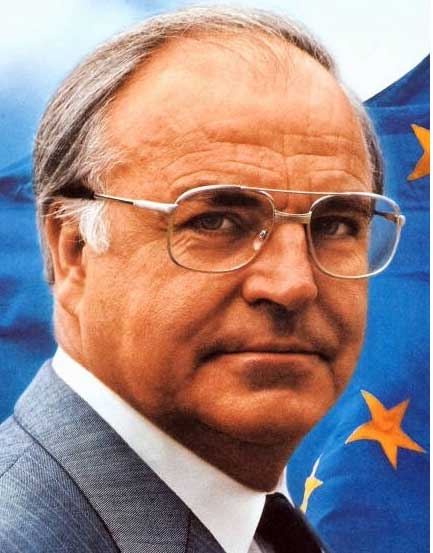
Helmut Kohl was the German statesman who, as chancellor for sixteen years, presided over the reunification of Germany and was a driving force behind European integration. Born in Ludwigshafen, he came of age in the ruins of the Second World War and rose steadily through the Christian Democratic Union to become its leader.
Kohl became chancellor of West Germany in 1982. A patient, shrewd politician often underestimated by opponents, he anchored West Germany firmly in the Western alliance during the last tense decade of the Cold War.
His historic opportunity came with the fall of the Berlin Wall in 1989. Seizing the moment with boldness and skill, Kohl pushed through the rapid reunification of East and West Germany in 1990 — overcoming the doubts of wary neighbors and securing the agreement of the Soviet Union under Gorbachev — and became the first chancellor of a reunited Germany since the war.
A committed European, he worked closely with France to deepen the European Union and was a principal champion of the single European currency, the euro, even at the cost of giving up the beloved deutschmark. He governed until his defeat in 1998. His final years were clouded by a party-finance scandal, but he remained honored as a father of modern, unified Germany and of European unity. He died in 2017.